
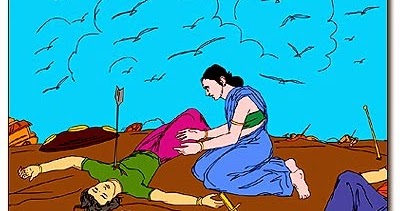
“We belong to the heritage of Chola. Bravery runs in your DNA”, I told my daughter as I asked she walked off to play her match with bandage for Patellar maltracking, swollen ankle, stiff shoulder and a mild fever. She lost but I held my head high. She did to me what I could never do to my mother. There I was reminiscing the story of Pura Naanooru – 278 written by Kakkaipadiniyar, a great Sangam tamil poet. Pura Naanooru is an anthology of 400 poems about the responsibilities towards the outside world, as war, king, warrior and son. It highlights the duties of public life.
Of all the poems of Pura Nanooru, 278 comes to my mind the most. It was written by. the Kakkaipadiniyar, a great female poet of the era. The story revolves around the context of a war. I want to highlight
நரம்பெழுந் துலறிய நிரம்பா மென்றோள்
முளரி மருங்கின் முதியோள் சிறுவன்
படையழிந்து மாறின னென்றுபலர் கூற
மாண்டமர்க் குடைந்தன னாயி னுண்டவென்
முலையறுத் திடுவென் யானெனச் சினைஇக்
கொண்ட வாளொடு படுபிணம் பெயராச்
செங்களந் துழவுவோள் சிதைந்துவே றாகிய
படுமகன் கிடக்கை காணூஉ
ஈன்ற ஞான்றினும் பெரிதுவந் தனளே.
Translation of the song by George Hart
When she heard the many voices saying, “That aged woman with dry,
veined arms where the soft flesh hangs down, she whose belly
is wrinkled like a lotus leaf—her son was afraid of the enemy army
and he showed them his back and ran!” then rage overcame her and she said,
“If he fled in the furious battle, I will cut off the breast
at which he sucked!” and she snatched up a sword and she
turned over every body lying there on the blood-soaked field.
And when she found her son who was scattered
in pieces, she felt happier than she had been the day she bore him.
Every time I listened to the story, it fills me up with the want to be a martyr. I wanted to fight for a noble cause but what made it even special was it was my mother who taught me this poem first. Something about that made the association even more. Cowardice in the face of a war can give one long life but death from a noble fight gives one immortality in the minds of people. I have to credit my mother for instilling the values of this story in me. In my early days, I wasn’t the person that people around me know today. I was meek, scared and anxious at every aspect of life. I was filled with what can only be described as nervous energy. I was reminded of the what my mother did to get me out of it. She was there guiding me from my deep depression, anxiety and paranoia to believing in myself and building the ability to face the world, let alone any form of adversity.
- She kept telling me stories of bravery. She kept pushing my ability forward without ever losing hope in me.
- She recognised my willingness to fight over the result of the fight.
- She sought opportunities which will expose me to various aspects of life.
However, the most important part of the story of bravery was witnessing her bravery and will power. She lost her mother when she was young. Had to cook and take care a family including her father, two sisters, two brothers in her teenage. Repeatedly faced harassment from siblings. Was asked to stop studying but somehow managed to push boundaries and finish two bachelors and two masters degrees. Dealt with verbal abuses from her in-laws for years. Lost her first child minutes just minutes before she was born. Worked as a school teacher for 2.5 decades with acute Asthma. She travelled over 30 minutes and walked few kilometre each day without being able to breath properly. If this woman cannot teach me to fight then who else can.







 Demystifying a skeptic's world