
The choice between sure death and a small probability of life is not something most of us will ever encounter. It is not even something we can fathom as it isn’t within the realms of possibility. If one is fleeing an oppressive Taliban regime with barbaric beliefs, then even clinging onto the outside of an aircraft is a chance worth taking. As we see the plight of millions of people stranded in Afghanistan and thousands trying to flee in the middle of a global pandemic, it is natural to question the timing of American troops withdrawing from the war-torn, landlocked country. I want to retrace the events which led to this decision and the reaction of the global leaders. Foreign policy can be messy, illogical, inconclusive and also devious. Foreign policies decisions also have a long term impact which are hard to predict.
The tale of 2 foreign policy blunders
The Cold war between the Capitalistic Social Democracies and the growing Communist single party rule was vastly responsible for what we consider present. From nuclear arms race which can obliterate our planet 10 times over to technology race to conquer space, the cold war had immense influence. What gets discussed less is the foreign policy impact of the cold war. Let’s pick two of the foreign policy blunders made by the US which are relevant to the context of Afghanistan.
The first foreign policy fiasco can be traced back to the era of Henry Kissinger and his indirect support for the capture of East Timor. The ego of the US war machine had been recently wounded by the Vietnamese. When Indonesian dictator Suharto invaded East Timor under the pretext of anti-communism, the Nobel peace prize winner Henry Kissinger found the opportunity to quench his thirst by supporting the movement. A weak Australia and other NATO nations joined. What followed in East Timor was ethnic cleansing and grave violation of human rights. The UN peacekeeping forces finally managed to get the imperialistic Indonesian forces in 1999. Why is this story relevant? This story is relevant as the freedom of East Timor is one of the biggest grudges Osama bin Laden had against the Americans.
The second foreign policy was the involvement of the US/UK coalition in the Soviet-Afghan war. The Soviet-Afghan war, ravaged Afghanistan from 1979-1989 between the USSR backed People’s Democratic Party of Afghanistan and the US and UK backed Mujahideen. Most of the later Taliban leaders were part of the Mujahideen. The principles of the Mujahideen haven’t changed from their original days. Towards the end of this war, al-Qaeda (formed in 1988) joined sides with Mujahideen to fight the Soviet-backed forces. The Mujahideen won the war with the fall of the USSR. This was followed by an Afghan Civil war which went till 1996. With the communist threat eliminated, the various factions of Mujahideen started fighting for control and ideologies. A newly formed group called the Taliban emerged victorious with the support of the al-Qaeda fighters and the Pakistani army. They took over Kabul in 1996, to establish the Islamic Emirate of Afghanistan. Once their mission of capturing Afghanistan was accomplished al-Qaeda started its attack against the US and its allies. This culminated in the 9-11 attack which shook the world.
By now, the world had forgotten the two big policy blunders which were nothing more than an extension of the cold war policy. The US support for both the Mujahideen in Afghanistan and the Indonesian invasion of East Timor was driven by their anti-communist ideals. Borrowing the language of Margaret Thatcher, the US government gave the necessary oxygen for the Taliban monster to grow. Would they have done this had they had the power of hindsight? It is anybody’s guess.
Evolution of the Afghan policy after 9-11 attacks
Three months after the 9-11 attacks, the Taliban government in Afghanistan and their al-Qaeda were ousted. They took refuge in the various remote parts of Afghanistan, Pakistan and some of its leaders went to Qatar. At this time the NATO army had less than 10,000 forces on the ground. They reached this level again only late last year. The total cost for the US treasury from this war is $830 billion which doesn’t include the military aid given to other countries to support the base or the support to veterans. A total of over 1 million people have been deployed to Afghanistan over the last 20 years.
The US foreign policy has also consistently changed over time. President George Bush said he wanted a ‘stable and free and peaceful’ Afghanistan. after the destruction of al-Qaeda and total elimination of the Taliban. When his administration finished its term, there were 30,000 American troops in Afghanistan.
The next President Barrack Obama wanted to end the war. His foreign policy included having a conversation with the weakened Taliban troops. Ironically, he increased the number of troops from 30,000 to around 100,000 by 2010. However, he did have a conversation with Taliban leaders. The then, Secretary of State Hillary Clinton had a condition, “Insurgents must renounce violence, abandon al-Qaeda, and abide by the constitution of Afghanistan, including its protections for women and minorities. If insurgents cannot meet those red lines, they will face continued and unrelenting assault.” The peace talks didn’t move further but the number of troops came down slowly. Obama left close to 10,000 members when his term ended. However, some territories had slowly been captured by the Taliban by then.
In comes the next President, Donald Trump. Trump has been calling for the end of the Afghan war and the return of the US troops during his entire campaign. The big difference between his secretary of state Mike Pompeo and the previous one was, Secretary Pompeo wasn’t keen on some of the protections which Secretary Clinton had demanded. So, on Feb 29, 2020, the US peace envoy Zalmay Khalilzad, and Mullah Abdul Ghani Baradar, the Taliban group’s top political leader signed a peace agreement. This deal meant close to 8600 US troops will leave in less than 4 months and the remaining by 14 months.
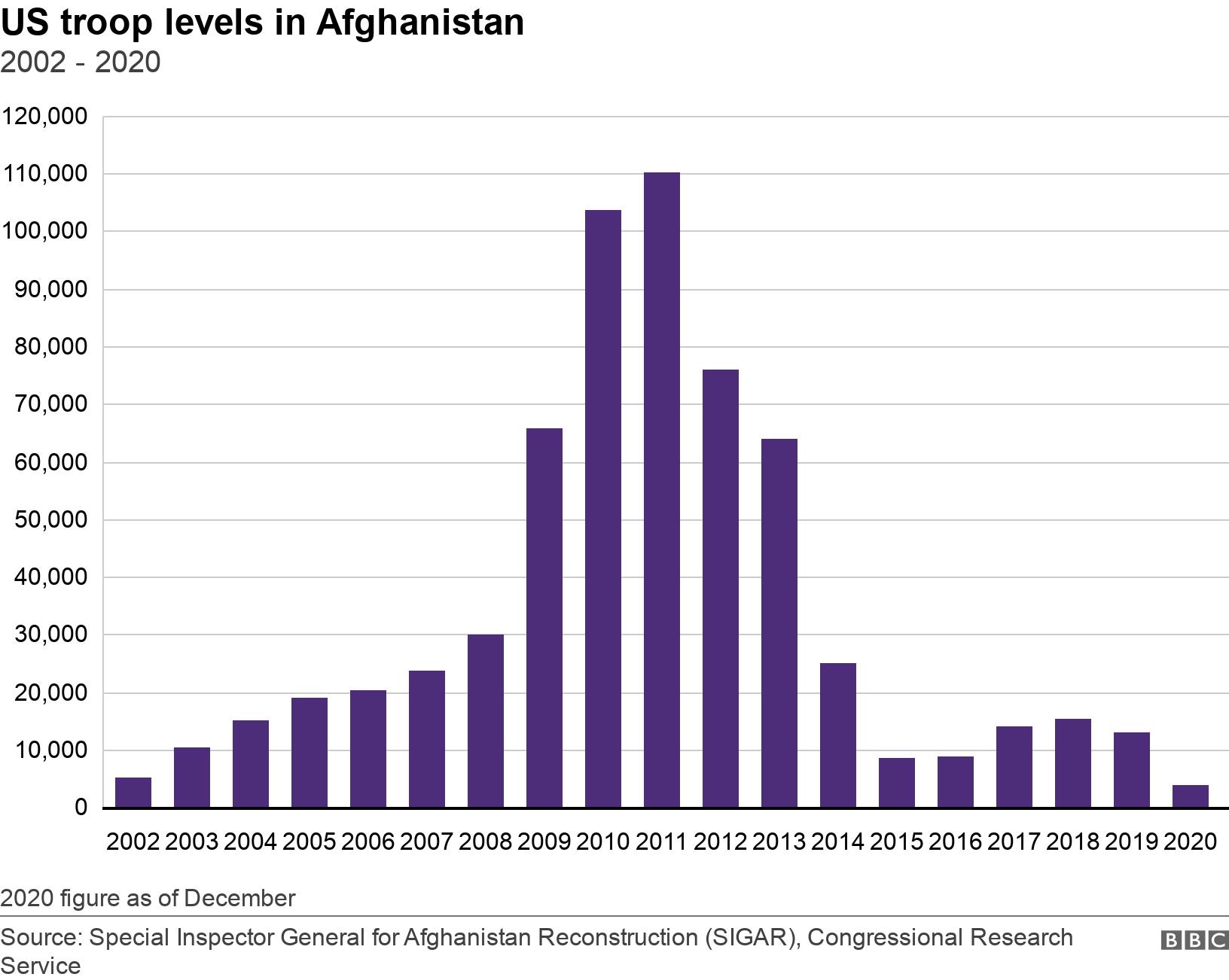
In April 2021, the current President Jo Biden announced that the remaining troops will return as per the agreement signed by his predecessor. In a press conference in Jul 2021, President Biden said he doesn’t believe the Taliban will take over Afghanistan. Was this wishful thinking or just bluff? Considering that the peace deal was signed with the Taliban permitting them to return, this was a very bold statement at its best.
The fall of Kabul
On the 6th of Jul 2021, the US forces leave Bagram airfield their main military base. By the 6th of Aug, the Taliban had started capturing provincial capitals. On 13th Aug, they take over Kandahar, the second-largest city in Afghanistan. At the dawn of 15-August-2021, when the Indians were celebrating their Independence day, their Afghani friends lost their national capital to the militia. It is not the collapse that has surprised people but the speed of it. President Mohammad Ashraf Ghani Ahmadzai fled the country leaving his people in the hands of a dangerous militia. Now, three big questions remain.
a. Who won this war?
b. Was this a strategic mistake?
c. What is going to unfold now?
The Afghan war has lasted twenty long years. The NATO forces spent over a Trillion USD in the war and building new infrastructure. 18 years of democracy crumbled in less than 9 days. The original leader Mullah Omar and Osama bin Laden are dead. Much to all our wishes, the Taliban have come back. Should we change the goal post now to say the aim was not to defeat the Taliban but to eliminate al-Qaeda?
For years now, members of both the left and right in the US have wanted the troops back. The only faction which was against it was the ones funded by the military-industrial complex. From Donald Trump to Bernie Sanders, from Rand Paul to Tulsi Gabbard, the politicians have called for the troops to return. This wasn’t a war for the US troops. The question was return was the one of if but when.
Now, could the handover been planned better? Was there an intelligence or strategic failure? To answer these questions, we need to look at the facts first. The US government has spent over $80 billion was spent training the 300,000 Afghan troops and provided them with modern war machinery. The Taliban on the other hand had 80,000 people with relatively older artillery. The Afghanistan government had army, police and local militia to support. Even with all these advantages, there was no clashes. The Afghan troops surrendered without a fight in most places. Would the situation have been any different if the US forces left a little later? Should the US forces have anticipated this and helped migrate the vulnerable people? In hindsight, I have to affirm the same. However, the writing for Afghan democracy was always on the wall. The only policy mistake I can see is that the allied forces should have got the people who supported them out of the country before exiting.
The future
Finally, to understand what could happen in the future, let’s look at the reaction of the global leaders in the aftermath. There are few distinct factions here. First is the pro-Taliban group which has the Pakistani Prime Minister Imran Khan. He has always been extremely supportive of the Taliban. Having been educated in Oxford and enjoyed the liberty of the western lifestyle for himself, Imran Khan has proclaimed this as “breaking the shackles of slavery”. The next group are opportunists, which include Russia and China. The leaders from these two countries have already spoken to the Taliban leaders. They see an opportunity with the fall of the retreat of the western forces. The next group are the sceptics, which includes countries like the US, EU, Australia and India. These countries won’t recognise the Taliban government but will be ready to have peace talks with them. The final group will include three countries that will not recognise or have discussions with the Taliban namely Isreal, Canada and Iran.
However, the big question in my mind is whether this move is the next foreign policy blunder after Vietnam, East Timor and the support of Mujahideen? While I don’t think it is a mistake of similar proportion, I fear the impact might be similar. We are going to see another refugee crisis, extreme oppression and international cry over human rights violations. The Taliban have an approach to gain power and unwavering allegiance to their interpretation of their religious texts. This approach will give them the power to rule but not the ability to govern. The local and global unrest is going to continue. The disadvantage for the Taliban over the Saudi Royal family is that they don’t have an oil supply to generate wealth.
 Demystifying a skeptic's world