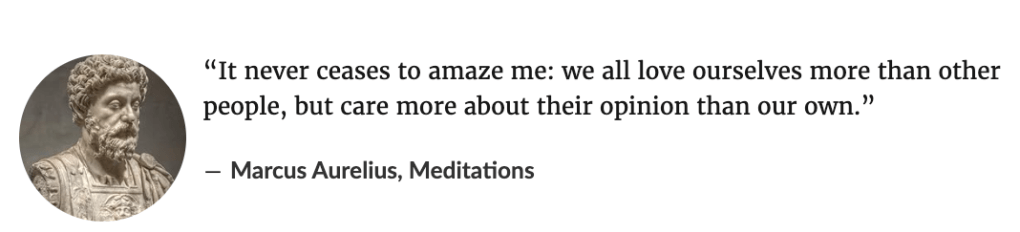
Rama, Shahjahan, Kovalan, the husbands not to be

“Do you really want me to be a husband like Rama?”

That was my question to my mother-in-law when she wished that my marriage with my wife would turn out like the one between Rama and Sita.

This has to be controversial. If I write 5 blogs and haven’t said anything controversial, I am not true to myself. For the moment, I want to ignore all real-life examples I have seen and only concentrate on stories. For every relationship, I have stories of someone who epitomised purity. As a husband, I could never find someone trusting, faithful, loving, protective and honest. People tend to create personality cult on someone who excels in one area, giving them free pass with others. So, for a change I want to take the opportunity to finish off this series with set of stories from which I learnt how not to be as a husband.

Rama, the husband

The story of Rama in Valmiki’s Ramayana was one where he was dutiful as a monarch, but never once as a husband. As a crown prince, it was his duty to obey the king and move out of the kingdom for 14 years. He abdicated the responsibility as a husband. I don’t doubt from the stories that he loved Sita a lot. However, asking her to prove chastity and fidelity by walking into a burning pyre was an act of cowardice. I would have respected the story more if he had walked with her. Then he couldn’t resist his sycophancy towards pleasing his people. He forces his pregnant wife to move away or prove her chastity again to the entire kingdom. This results in him losing his wife, who walks away to the jungle. Finally, when he decides to go get her back, he poses the same request again. At this point, Sita has it enough and decides to end it. The only credit I can give Rama, as a husband is that he was consistent. This story if anything proves the loyalty of Sita in the midst of a terrible marriage.

Shahjahan, the husband

Who cannot look at Taj Mahal and wonder about the symbol of love built by Mughal Emperor Shahjahan for his wife Mumtaj. A kind of love where Shahjahan was already married couple of years earlier with this first wife, Kandahari Begum. He also married another woman a couple of years after he married Mumtaj. That also didn’t stop him from marrying one more after she died. Her death was also imminent as she was pregnant with his 14th child by the time she was 38. This isn’t an act of love or devotion. This is just a typical emperor who wanted to show off his wealth. Every architectural marvel of the past was given for some reason but the truth is that it was built to show off one’s power and wealth. Taj Mahal is no different. When I see it I feel the cry of women. It didn’t need modern science to know that the process of child birth was painful or can be fatal. If I love my wife why I would I try something where the chance of her death is anything above zero. It was the fourteenth child. He already had enough by then.

Kovalan, the husband

In the previous blog, I mentioned the famous Tamil epic Silapathigaram. The entire epic glorifies Kannagi, the lady who fights for the truth when her husband was mistakenly executed by the Pandya king. She gets immortalised as a symbol of chastity. Kovalan, the husband of Kannagi, was a philanderer. He was a wealthy merchant who decided to spend all his wealth on his mistress Madhavi. Once he becomes penniless, he comes back to Kannagi, and she accepts him back in her life. She is being praised for this. I have never heard of a story where a woman commits adultery and the husband is glorified for taking her back. The reason is that it rarely happens if at all. The entire glorification of Kannagi as the Pathini (பத்தினி) meaning Chaste wife in the story is not a responsibility a wife alone should carry.

I am not in any way speaking ill of the literature here. The literary value of Ramayana or Silapathigaram is absolutely tremendous. Any literature lasting for a few thousand years is a showcase of its greatness. I am merely highlighting the mistakes the protagonists have made as husbands. Well, I certainly never wanted to be them. How I am and my mistakes are for people to judge.
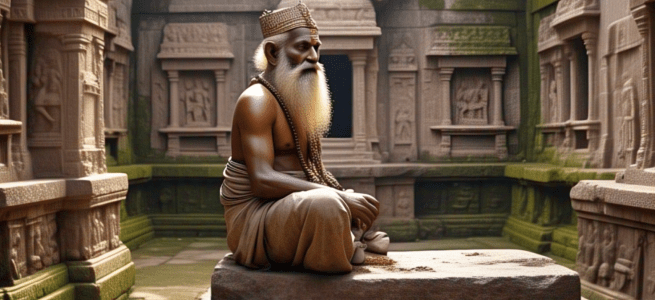
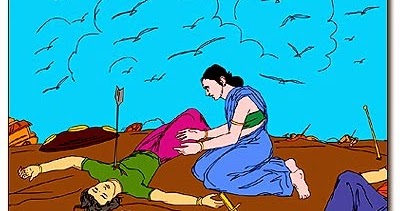
Cheran Chenguttuvan, the brother of Ilango Adigal

As the saying goes “A friend loves at all times, and a brother is born for adversity

Of all the responsibilities that I have seen, the one of the brother endears me. That is also because I had my own sister and was practically a brother to a dozen more cousins who were born after me. An interesting aspect of evolution is that having one sister makes you careful. With so many sister like figures in my early life, it was confusing. Am I supposed to be nice? What does it mean? Should I fight? Am I losing? The confusion between competition and protection causes a yin-yang in our decision-making every time. As I grew older, I started looking at most people like I did my sister. There were plenty of stories where the brotherly responsibilities inspired me. There are three which come to my mind immediately.

  1. Bharatha, the brother of Rama
  2. Ilango Adigal, the brother of Cheran Chenguttuvan
  3. Ravana, the brother of Surpanaka

While each of these stories are great in its own way, I want to focus on the one of Cheran Chenguttuvan and Ilango Adigal. Let me share the story as I remember it.

Imayavarampan Cheralatan was a Chera King who rules in the Chera Kingdom in the 6th – 7th Century BCE. Chera was a Tamil kingdom, though it is the area of modern Kerala. He had two sons, the eldest one was Chenguttuvan and the younger one was Illango. The princes grew up fond of each other. As legend has it, an astrologer tells Cheralatan that his younger son Illango would become the king and not Chenguttuvan. The prediction gets the king worried as he sees no good way this can happen. In their tradition the first born prince always becomes the king, unless he gets killed or his younger sibling pushes him aside in an act of war. Seeing his father worried about the prospect of him either dethroning Chenguttuvan or preventing him from ever becoming the king, Illango decided something extraordinary. He goes to a nearby Jain monastry and becomes a Jain monk. He renounces not just the throne but the entire life of royalty to ensure his brother can get his due. Prince Ilango becomes Ilango Adigal and goes on to write one of the 5 great epics in Tamil Literature, Silapathigraram. In his work, he goes on to praise his brother Chenguttuvan as a powerful and respected ruler who conquered the Kadambu tribe, and the Kongar people. He is also mentioned as a figure of importance in the introduction of the Pattini cult, which worships Kannagi, the virtuous wife in the epic.

People mostly resort to actions that favour them or put others down. It is relatively common to do the right thing when there is no upside. It is hard or next to impossible to do something when there is a downside, and by just staying quiet, you have a considerable upside. We all talk of sibling rivalry. For every sibling who supports each other, hundreds end up fighting each other or severing relationships. The sacrifice of Prince Ilango is beyond my comprehension. There is something deeply poetic about the story itself, which I am glad resulted in the epic we have today.

Koperuncholan, the friend of Pisiranthaiyar

As William Shakespere famously said, “Words are easy like a wind, faithful friends are hard to find”

Friendship as a word is used fairly frivolously by everyone. Of all stories that stuck with me over years, there were three from the tamil literature that influenced how I viewed friendship.

  1. Koperunchōlan and Pisirānthaiyār
  2. Adiyamaan and avvayar
  3. Paari and Kabilan

While each of these are worthy of an epic in its own right, I want to bring out the one between Koperunchōlan and Pisirānthaiyār.

Koperunchōlan and Pisirānthaiyār

The story of Koperunchōlan is a fascinating one of duty, affection and friendship. He was a patron of arts and loved my numerous poets of his time. Of all the stories of friendship that surround him, the one between him and Pisiranthaiyar impacted me the most. There was an element of poetic purity in it, as with everything pure, and it had an ending that was tragically beautiful. I will first share the story as I understood it and then reasons and my learning.

Koperunchōlan as the name suggests was the King of the Chola Dynasty. His fame and patronage spread far beyond the borders of his kingdom. In those times, Madurai, the capital of his rival Pandya kingdom was the home for the Tamil Literary Sangams. Pandya Kingdom was ruled by another famous king Arivudai Nambi, who greatly supported Pisiranthaiyar.

One day, a Chola Poet presented his work in the Tamil Sangam. He showered great praise on his king Koperunchōlan. Listening to this, Pisiranthaiyar spoke to him to learn more about the king. He continued to do this over time. Finally, he was impressed so much that he wrote a letter praising the king and asked the poet to hand it over to King Koperunchōlan. The letter impressed the king a lot. He was moved by a poet in his rival country, demonstrating the courage to praise him. He learned more about Pisiranthaiyar from his poets. He was mightily impressed, so he wrote a letter back to Pisiranthaiyar. The friendship blossomed through mutual respect as they corresponded through letters.

Time flew by, and the sons of Koperunchōlan wanted to wage a war against their father to gain control of the kingdom. While he initially thought of waging a war to keep his pride alive, Koperuncholan was advised against it by his friend Pullarrur Eyiŗŗiyaņar. He resorted to a traditional Jain form of suicide by penance called vadakiruttal. In this form, the person sits facing north without moving, water, or food until the body dries to death. As part of his dying wish, he sent out to Pisiranthaiyar to join him in the rock next to him. Even though people told him that Pisiranthaiyar won’t come the King refused to believe. As the news reached Pisiranthaiyar, he rushed to his side but by then Koperunchōlan had already died. He sat next to his friend and ended his life through the same vadakiruttal process.

Their life has been immortalised in a few purananooru verses.

Verse-215

கவைக் கதிர் வரகின் அவைப்புறு வாக்கல்
தாதொரு மறுகின் போதொடு பொதுளிய
வேளை வெண்பூ வெண்தயிர்க் கொளீஇ,
ஆய்மகள் அட்ட அம்புளி மிதவை
அவரை கொய்யுநர் ஆர மாந்தும்
தென்னம் பொருப்பன் நன்னாட்டு உள்ளும்
பிசிரோன் என்ப, என் உயிர்ஓம் புநனே;
செல்வ்க் காலை நிற்பினும்,
அல்லற் காலை நில்லலன் மன்னே.

Translation

They say Ānthai lives in Pisir town in the
southern king’s fine country with Pothikai
Mountain, where a herder woman cooks a
meal with fork-eared pounded millet,
pours on it white curds and white velai
flowers that grow in profusion on the streets
with cow dung dust, and serves with gravy
with lovely tamarind, for avarai bean pickers
to eat to their full.

He is one who nurtures my life!  Even though
he stayed away from me when I was wealthy,
he will not stay away in my time of pain!

The beauty of the relationship

The poetic beauty of the relationship isn’t in the death but the life of the two friends. They understood each other through actions. Their understanding went deeper than what the words could communicate. Their affection wasn’t about benefit but about respect. Above all, it wasn’t about what they received but what they gave. They gave each other status.

For me, the story wasn’t about what I received. It brought me a sense of respect for friendship, which I should admit I haven’t fulfilled till this very day. I have met people who supported me without expecting anything. I have met people who respected me when I didn’t deserve. As far as what I have done, it is for them to judge, but from where I stand, I have only received.

Kakkaipadiniyar, the mother epitome

“We belong to the heritage of Chola. Bravery runs in your DNA”, I told my daughter as I asked she walked off to play her match with bandage for Patellar maltracking, swollen ankle, stiff shoulder and a mild fever. She lost but I held my head high. She did to me what I could never do to my mother. There I was reminiscing the story of Pura Naanooru – 278 written by Kakkaipadiniyar, a great Sangam tamil poet. Pura Naanooru is an anthology of 400 poems about the responsibilities towards the outside world, as war, king, warrior and son. It highlights the duties of public life.

Of all the poems of Pura Nanooru, 278 comes to my mind the most. It was written by. the Kakkaipadiniyar, a great female poet of the era. The story revolves around the context of a war. I want to highlight

நரம்பெழுந் துலறிய நிரம்பா மென்றோள்
முளரி மருங்கின் முதியோள் சிறுவன்
படையழிந்து மாறின னென்றுபலர் கூற
மாண்டமர்க் குடைந்தன னாயி னுண்டவென்
முலையறுத் திடுவென் யானெனச் சினைஇக்
கொண்ட வாளொடு படுபிணம் பெயராச்
செங்களந் துழவுவோள் சிதைந்துவே றாகிய
படுமகன் கிடக்கை காணூஉ
ஈன்ற ஞான்றினும் பெரிதுவந் தனளே.

Translation of the song by George Hart

When she heard the many voices saying, “That aged woman with dry,
veined arms where the soft flesh hangs down, she whose belly
is wrinkled like a lotus leaf—her son was afraid of the enemy army
and he showed them his back and ran!” then rage overcame her and she said,
“If he fled in the furious battle, I will cut off the breast
at which he sucked!” and she snatched up a sword and she
turned over every body lying there on the blood-soaked field.
And when she found her son who was scattered
in pieces, she felt happier than she had been the day she bore him.

Every time I listened to the story, it fills me up with the want to be a martyr. I wanted to fight for a noble cause but what made it even special was it was my mother who taught me this poem first. Something about that made the association even more. Cowardice in the face of a war can give one long life but death from a noble fight gives one immortality in the minds of people. I have to credit my mother for instilling the values of this story in me. In my early days, I wasn’t the person that people around me know today. I was meek, scared and anxious at every aspect of life. I was filled with what can only be described as nervous energy. I was reminded of the what my mother did to get me out of it. She was there guiding me from my deep depression, anxiety and paranoia to believing in myself and building the ability to face the world, let alone any form of adversity.

  1. She kept telling me stories of bravery. She kept pushing my ability forward without ever losing hope in me.
  2. She recognised my willingness to fight over the result of the fight.
  3. She sought opportunities which will expose me to various aspects of life.

However, the most important part of the story of bravery was witnessing her bravery and will power. She lost her mother when she was young. Had to cook and take care a family including her father, two sisters, two brothers in her teenage. Repeatedly faced harassment from siblings. Was asked to stop studying but somehow managed to push boundaries and finish two bachelors and two masters degrees. Dealt with verbal abuses from her in-laws for years. Lost her first child minutes just minutes before she was born. Worked as a school teacher for 2.5 decades with acute Asthma. She travelled over 30 minutes and walked few kilometre each day without being able to breath properly. If this woman cannot teach me to fight then who else can.

Ajatashatru, son of Bimbisara

“What will happen to you if I don’t spend time with you?”, I asked my daughter a few weeks back.

The narcissist in me was thinking of how much time and effort I was spending with my daughter, taking her to classes, teacher her, training with her. I wanted her to acknowledge the effort. I wanted her to be grateful. In a moment of reflection, I realised how very unbecoming was my wish. It was not for my daughter to learn but for me to feel acknowledged. I was reminded of the story of Ajatashatru that I read as a child. The story has always been with me for two reasons. I want to share both here.

Ajatashatru was the king of Magadha who is believed to have lived in 450 BC, right at the same time as Gautama Buddha. As a teenager he imprisoned his father, King Bimbisara and forcefully took over him kingdom. He has massive expansionist ambitions. In a few months, he ordered for the execution of his father. Months later, his uncle Presenajit, the king of Kosala waged a war on him to avenge the death of his friend and the husband of his sister, Bimbisara. During the war, Ajatashatru confessed told him the story.

“The day I ordered execution of my father, I had a child of my own. I lifted the baby and realise the love a father has for his children. I realised the sacrifices a father is ready to make for his children. I didn’t want my father executed anymore. I rushed but by then my orders were already carried out. I am unable to live in peace from then on. I couldn’t go back to the same palace. I moved the capital from Rajgriha to Champa to stay away from the memories. I am haunted by these memories.

I have never felt at peace ever since. I keep waging wars as it distracts me from those memories. “

Firstly, the story stuck with me for how sons never realise the sacrifices of their father till they become one. Then they expect their children to be grateful without ever showing the same to their father. The second one was how mistakes haunt people and the coping mechanisms one takes. I want to talk more about the former in this post.

Coming back to my present, as I started reflecting on the story. I started thinking of the sacrifices my father has made for us. He could have very comfortable life, if he didn’t sacrifice as much. As I just pondered over my childhood, I was filled with gratitude.

  1. As a computer science and mathematics graduate, he could have easily got a job in many parts of the world, which meant he won’t be able to take care of his parents. He sacrificed his career for them.
  2. To ensure, we have a place, he invested everything he can to buy a house. For the next 15 years, he didn’t buy anything for himself from clothes to shoes.
  3. He was a diabetic but he worked three and sometimes 4 jobs to ensure our family can afford everything. Today, we talk about working on weekends like some sort of sacrifice. From my memory, he worked a single day job, 2 separate evening jobs, a weekend job and used to run private tuitions. Being tired was a luxury he couldn’t afford. He didn’t have anyone to complain about his situation.
  4. He travelled a lot on a scooter, which in those poor roads had the same impact on one’s hand like drilling concrete. His schedule on an average day was
    • Wake up at 4 – 4:30
    • Help getting things ready for all of us
    • Drop me and my sister to school at 7:30
    • Go to work
    • Come back from work at 3:00, pick us up from school
    • Go to his next job
    • Come back at 8:00 pm
    • Have dinner and continue the next day
  5. Even after doing all this for the first 1.5 decades of my life, I never saw him do anything for himself.

I was comparing my situation. I drive air conditioned cars. I can afford to buy more than what I need. I have more than what I deserve. I can take off anytime I want. My father topped the state in HSC but couldn’t afford to get application form for engineering. He had to top the university every year, so that he can study the next. He lived in a home because my grandparents couldn’t afford food while he studied school. I was an average student, who was sent to UK to do an MBA. The luxuries in my life today are purely a function of the sacrificed made by my parents.

Well, if I want my daughter needs to be grateful, then what should I do? Actually, I want her to be grateful not to me but to her grandfather. As a first step, I decided to stop talking about myself but instead about the sacrifices her grand father. I want her to be grateful for the life we do today. That was my Ajatashatru – Bimbisara moment.

The 5 stories of life

Life teaches us lessons. The lessons sometimes turn out to be more important for others than they are for the people who experience them. When great writers write about these events, the learnings transcend generations as stories.

We all hear stories, witness events that shape out thoughts. I am in a phase of my life where I reflect a lot on what has shaped me. I want to share the stories, learnings and my experience across a variety of aspects. I learnt rules of engagement across relationships from these stories.

  1. Ajatashatru, son of Bimbisara
  2. Kakkaipadiniyar, the mother epitome
  3. Koperunchōlan, the friend of Pisirānthaiyār
  4. Cheran Chenguttuvan, the brother of Ilango Adigal
  5. Rama, Shahjahan, Kovalan, the husbands not to be

To be needed, respected or liked: How we got the priorities wrong?

We are what we aspire. People like us when they find us agreeable, enjoyable and satisfactory. People respect us when they feel deep admiration for our abilities, qualities or achievements. People need us if they require us because it is essential or every important. If I were to prioritise them, I would always want to be needed. To be needed, it requires one to be both talented and critical. However, in the corporate world today, not being liked hurts people the most, while being in a position of needed but not liked is considered the worst. I do agree that not being needed or liked can be the worst. I want to break this reflection of mine to a set of topics, starting with the importance of this idea.

Why is this discussion important?

The professional world has moved from infancy to insanity with no stops in between. For people like me who watched the horrors of professional exploitation of individuals from both the owners and unions, it is hard to make sense of the trigger. I remember in early 1990s and 2000s, there were two different kinds of industries. The first one was where, business owners would treat professionals poorly as long as possible. They will need your talent and the best way to retain your talent is by entrapment. The second type was one where unions held professionals to ransom. They ensure that one’s ability was never rewarded on par with their contribution. Any one trying to challenge this was a traitor.

If I look at the professional world now, individuals are forced to be acceptable and likeable. There is a high chance that people will be reprimanded for having opinions, saying uncomfortable truth or on set of arbitary guidelines set to constraint oneself. Unions are few and far these days. We have moved from being entrapped for exploitation to entrapped on social norms, professionalism and conformism. It has killed originality to such an extent that we look at people like Elon Musk as some form eccentric.

What is the impact?

People with power always find ways to retain it for their lineage. Historically, they have found ways to achieve this through religion, slavery, controlling knowledge, fear of law and if nothing works then violence. These rules eventually meant that there is a group that orders and there is a much larger group that executes. It also prevented the group that executes from ever switch sides to group that orders. In the modern corporate world, these rules have been eliminated. People are free to learn, legal system has evolved and threat of violence isn’t much of an option. How do we therefore ensure distribution? People have done it changing the dymanic of the game itself.

  1. A person who is knowledgeable and needed cannot be let go
  2. A person who is knowledgeable and needed will not care of medicrisy
  3. A person who is knowledgeable and needed will not worry about telling the truth

Businesses have started to distribute knowledge to ensure dispensability. The rules have been formed to force people to believe that being likeable is more important that being needed. I have not seen a HR rulebook or ethics code where it clearly says, one can tell uncomfortable truth or one cannot be fired if their truth hurt or being right is more important that being fair. However, I have read enough books which force me to never hurt sentiments, apologise even if I am right and above all be respectful for feelings. Entropy on of the most crucial phenomenon in Thermodynamics and equilibrium is rooted in disorder. Employees are forced and have subsequently been brainwashed to execute. This starts from an associate and goes all the way to the CEO. As a result of this dynamic, we have created a world where dispensability thrives.

My prediction

While I may not consider myself a socialist anymore, the concept of materialistic conception of history continue to hold true even after centuries. While the tools of oppression might have been different across societies, the existence of oppression has been constant till date. There are three classes globally, oppressor, oppressed and free. While the free may look enlightened in general, it is only a subset of people who are knowledgeable, have broken the shackles and have found no need to oppress anyone. I am still in the camp that free will is an illusion. People who want to break the shackles will always break it. They will prioritise wisdom over adulation and respect. They won’t toe the social lines or bother about the impact of it. They know that society needs them. The rest will keep oppressing and getting oppressed.

Breaking shackles

The key to breaking free from the chains of subjugation is to release oneself from the pleasure of adulation. When we fall for praise, we tend to enjoy being liked. When we enjoy being liked, it is hard to state truth. The second step in this is to focus on gaining knowledge through critical thinking. Finally, obedience and loyalty are good for masters and not for people who want to be independent. We are 1/2 a chromosome away from a chimpanzee. To expect more from humans is just as ridiculous like asking a chimpanzee why it can’t add two numbers. We have one life. It is paramount to live it free.

My tryst with anxiety – V: The remnants

“You will suffer from PTSD for years to come,” my doctor said two years back.

PTSD is one of those phenomena which is commonly used, expressed in terms of symptoms but the truth is always concealed. Like the famous comedy routine of George Carlin, the pain is covered in the jargon. When you go through it doesn’t feel like the trauma is post. It feels present. It has been over two years, and I am out of medication but the remnants of the period still remain. I have laughed off all the physical impact but once in a while, I relive the pain. Otherwise back to my physical and mental strength, I want to share one (hopefully) final post on the experience.

For the lucky people who have never experienced this, I have an analogy to explain. Imagine you are forty years old and living in 2024. Your eyes see electric cars, tall buildings, smartphones, and heavy traffic. Your brain makes you believe, you are a child in the middle of an old town in 1985. There is a massive dissonance between what you need to experience to what you do. This isn’t post-trauma. This is a different form of trauma, one where the reality is distorted by your experience. Another and something more personal to me is what a victim feels when confronted with their abuser even after years. The abuser could be a frail shadow of the past and the victim is no more a child but a more powerful person. However, the shiver down the spine that sends a signal of helplessness that you felt during those wretched times can never be explained.

The purpose of this post isn’t to garner sympathy or bask in victimhood. Having gone through this twice in my life, first as a teenager and second as an adult, I can’t stop myself from comparing and coming up with coping mechanisms. The trigger for this post was an innocus catchup I had with one of my office mates from the past. we shared a few laughs and discussed about the happenings. I came home and felt a sense of drain, doom and gloom. The calendar said 2024 and my body was reacting like Dec 2022, immersed in anxiety.

No shame in abnormality

You feel weak, your heart races, you are nervous about the situation that rest of them feel normal. You don’t want to show the weakness to anyone else as you feel ashamed of the abnormal reaction. I have continuously reinforced myself that the physiological manifestations of my emotional pain doesn’t need external gratification. I feel what I feel and I am secure about it. If I feel ashamed to exhbit what I feel is a sign of weakness then I won’t. I would rather keep my sanity with that pretence.

Safety is key

These are times where you feel the need to share. As a child, it is hard to express because you lack words. As an adult, it is hard to express because you fear judgement and ridicule. You can’t share it with closed ones as they will continue to get hurt. You can’t share it with distant ones because you fear information leakage. A therapist becomes your best anonymous companion. If you can’t then find a friend who can be your support buddy. If nothing works, then imaginary discussions to yourself isn’t bad either. Talking to oneself is one of the safest ways to express.

Sleep

A good night’s sleep does wonders. The natural circadian rhythm for cortisol ensures that it is least at midnight. Hitting the bed early and getting a wonderful sleep helps regulate the anxiety caused by PTSD. Personally, it refreshes my brain to start all over again but this time more clearly.

Stay away

Advices like “Confront your abuser” or “Face your fears” are great for normal situations. When you are having PTSD, you don’t need to confront your abuser or face the trauma again. You need time to recover. If staying away is the best way to deal with the situation, then it is perfectly acceptable to stay away from the abuser or the environment that resulted in the trauma.

All of Fast Bowling in India is a footnote to JJ Bumrah

Alfred North Whitehead once famously said, “All of western philosophy is a footnote to Plato.” I couldn’t borrow a better assertion to highlight the contribution of Jasprit Jasbirsingh Bumrah. Today marks what would have been the fifth day of the final test between England and India at Dharamshala. The series marked a few great moments, starting with 700 wickets to James Andreson, who doesn’t seem to age. Ravichandran Ashwin both reached 500 wickets and also completed 100 tests. Sarfraz Khan got a chance to play for India after knocking the door fibre by fibre over the last 3 years. Yashasvi Jaiswal has raised the bar so high that falling doesn’t look like an option anymore. Shubman Gill managed to show why he has been rated quite high. Why on earth am I talking about Jasprit Bumrah? I will use statistics and highlight the impact.

Test Matches

Test matches continue to be the grand stage for cricketers of substance. The nature of the game has moved from an era of negotiating defensively to asserting positively, whether it is batting, bowling or fielding. I want to start by how Jasprit Bumrah compares with other Indian Fast Bowlers.

Stats

Amongst fast bowlers who have taken over 50 test wickets, Bumrah has the best average, economy and strike rate.

PlayerSpanMatInnsWktsBBIAverageEconStrike Rate
JJ Bumrah2018-202436691596/2720.692.7445.1
B Kumar2013-20182137636/8226.092.9453.1
Mohammed Shami2013-2023641222296/5627.713.350.2
N Kapil Dev1978-19941312274349/8329.642.7863.9
Mohammed Siraj2020-20242750746/1529.683.3553.1
While, India always boasted of spinners who can win series in their homeland, the issue was the lack of penetrating fast bowlers to take 20 wickets abroad. Bumrah again tops the charts in terms of average, economy rate and strike rate.
PlayerSpanMatInnsWktsBBIAverageEconSR
JJ Bumrah2018-202428541266/2721.832.7248
IK Pathan2003-20081528737/5925.573.4544.4
Mohammed Siraj2020-20241732616/1528.653.352
Mohammed Shami2013-202343801536/5630.493.3854
Z Khan2000-201454952077/8731.473.455.4

Impact

The impact of a player is not just performing but contributing to the victory of the team. Again, not only does Bumrah have the best average, economy and strike rate amongst the fast bowlers in victories, he has the second best percentage of wickets taken for the winning cause amongst everyone.

PlayerSpanMatInnsWktsBBIAverageEconSRWin %Wicket %in wins
JJ Bumrah2018-20241733916/2715.192.733.647.22%57.23%
N Kapil Dev1979-19942448907/5618.32.4245.218.32%20.74%
J Srinath1993-20021734686/2120.32.548.725.37%28.81%
Mohammed Shami2013-202331621185/2820.343.0939.348.44%51.53%
IK Pathan2003-20081326677/5920.523.153944.83%67.00%
If these statistics aren’t amazing enough, then a quick comparison across eras on fast bowlers with over 150 wickets places Bumrah third in the list, surpassing Malcolm Marshall, Joel Garner, Curtly Ambrose and even Glenn McGrath.
PlayerSpanMatInnsWktsBBIAverageEconSR
SF Barnes (ENG)1901-191427501899/10316.432.3641.6
AK Davidson (AUS)1953-196344821867/9320.531.9762.2
JJ Bumrah (IND)2018-202436691596/2720.692.7445.1
MD Marshall (WI)1978-1991811513767/2220.942.6846.7
J Garner (WI)1977-1987581112596/5620.972.4750.8
CEL Ambrose (WI)1988-2000981794058/4520.992.354.5
FS Trueman (ENG)1952-1965671273078/3121.572.6149.4
GD McGrath (AUS)1993-20071242435638/2421.642.4951.9

ODIs

Against my natual inclination, I decided to also compare him with in One Day Internationals. This is because, the nature of the game has change more than tests. An economy rate of 4 was high in 1970s while it is insane in 2020.

Stats

While the economy rates may be varied, Bumrah still tops Indian fastbowever with over 100 wickets in terms of average. Mohammed Shami the unlucky second with a even better strike rate goes for one run per over more than Bumrah.

PlayerSpanMatInnsWktsBBIAverageEconSR
JJ Bumrah2016-202389881496/1923.554.5930.7
Mohammed Shami2013-20231011001957/5723.685.5525.5
N Kapil Dev1978-19942252212535/4327.453.7144.2
AB Agarkar1998-20071911882886/4227.855.0732.9
J Srinath1991-20032292273155/2328.084.4437.8

Impact

If we look at contribution of Bumrah in wins, the statistics are even more staggering. The economy rate comes down even further. What is even more impressive is that India has won 70% of the matches he has played and 80% of his wickets have come in a winning cause.

PlayerSpanMatInnsWktsBBIAverageEconSR
JJ Bumrah2016-202363631196/1918.694.2126.6
Mohammed Shami2013-202362621397/5718.745.1721.7
S Madan Lal1975-19873434504/2019.683.6632.2
Mohammed Siraj2019-20233333596/2120.494.8325.4
RMH Binny1980-19863333544/2920.74.1629.8
The other way I want to look at impact is how well Bumrah has inspired people to perfrom around him. Brett Lee or Jason Gillespie were never the same without Glenn McGrath. I want to compare three players who played before and with Jasprit Bumrah. The changes to the average and strike rate are quite drastic in matches with Jasprit Bumrah.

In matches before Jasprit Bumrah

PlayerSpanMatInnsWktsBBIBBMAverageEconSR
B Kumar2013-20182137636/828/9626.092.9453.1
Mohammed Shami2013-201839751426/569/11829.523.3852.3
I Sharma2007-2018901612677/7410/10834.283.1964.4
In matches with Jasprit Bumrah
PlayerSpanMatInnsWktsBBIBBMAverageEconSR
B Kumar2018-201824104/876/12020.33.0240.2
I Sharma2018-20211630585/438/7420.812.5648.6
Mohammed Shami2018-20222547916/568/10726.93.2250.1
Number don’t lie. So, it is easy to see how well Bumrah has done as compared to the greats of this era and that of the past. However, I do want to look into the intagible qualifiers of the bowlers. As someone who has watched from Kapil Dev to Javagal Srinath and then Zaheer Khan, it is hard for me not to compare the impact they all had on the game. With absolute respect to each of those players who performed well, Jasprit Bumrah is on a league of his own. He has broken traditions not just in terms of actions but also in terms of the expectations of a test bowler. The only bowler I can compare from my memory is Malcolm Marshall. Marshall came on the back of Holding, Garner and Roberts. He left behind Courtney Walsh and Curtly Ambrose. Many of the them took more wickets and they were all greats but Malcolm was the GOAT, who galvanised the unit. Jasprit Bumrah is that galvaniser for the Indian Cricket. There were philosophers before and after but Plato will forever be remembered as the icon of western philosophy. Similarly, Jasprit Bumrah will be icon for Indian Fast Bowling or rather Fast Bowling in India will be a footnote to Jasprit Bumrah, a true modern great.

“Stop being jealous”- The remark that got me thinking

I am an assured, candid, egoist who bulldozes people to get his point through. The part assured was always key for me as that was the one that enabled me to be candid. That made me stand up and accept that if I walk into a room of 100 random people, I have a zero chance of being in the top 20% of smart people. What I lack in terms of IQ, I try to compensate with my work ethic. This acknowledgment also led me to want to keep learning more and admire people who are way smarter than me. The quote I was able to relate to the most was from Will Smith when he said in an interview, “If we get on a treadmill together, you’re going to get off first, Or I’m going to die.” Why am I saying this now? Recently, I had an exchange with a friend who I trust and respect who said, “Stop being jealous. Reflect on the last time you praised someone wholeheartedly.” While my response to her was one of petulance and denial, I wasn’t able to stop thinking about it. Why did that assertion bother me? What connotation did I have for the adjective jealous? What should I learn from this about myself? I felt the best tribute I could give my friend was to be candid about my reflections. Since, this post is a product of reflection, I will use the pronoun I more than any other.

The clear dichotomy between Jealousy and Envy

In a strict collochial usage, I tend to use the words envy and jealousy quite interchangeably, while always considering the meaning of the former. While, I would have been able to define them when questioned, I never used or understood the usage of those words in the context of what they meant. Jealousy is when one feels threatened that someone will take away something one has. It leads to anxiety, fear and sometime rage. Envy is a feeling of discontent or covetousness with regard to someone’s advantages, success or possessions. When Aristotle can explain the difference, I want to use it.

Jealousy is both reasonable and belongs to reasonable men, while envy is base and belongs to the base, for the one makes himself get good things by jealousy, while the other does not allow his neighbour to have them through envy.

Aristotle

My priced possessions include the handful of decent relationships I have built in my life and my ability to think. While the former has a shelf life that depends on how quickly I drive people away, the latter will fade away with age.

So, am I jealous? Of course, I am. I am jealous when my priced possessions get taken away. The way I deal with the loss, is by allowing my ego to take over. The ego which somehow convinces me that I am much more than that relationship or ability.

Am I envious of anyone? Of couse, I am. I envy people who are at the level of smartness that I can never reach. I also respect and admire people whom I envy. I can never be them.

Assured about my insecurity

I am extremely assured and secure in my world of insecurity. I live my life in a way that I have never felt secure in what I know or behaved. Like Alan Watts famously summarises in his philosophical magnum opus ‘The Wisdom of Insecurity’, I have to admit that I am insecure about everything I know and possess. Insecurity like jealousy, can have a negative connotation and when combined can even sound dangerous. The truth however like many other aspects is in the context. It is what is the insecurity about, our acceptance of the insecurity and how we deal with it.

The more we try to live in the world of words, the more we feel isolated and alone, the more all the joy and liveliness of things is exchanged for mere certainty and security. On the other hand, the more we are forced to admit that we actually live in the real world, the more we feel ignorant, uncertain, and insecure about everything.

The Wisdom of Insecurity by Alan Watts

Am I insecure about my work? Of course, I am. I know and acknowledge that I am surrounded by people who are not just smarter than me but also have achieved more than I could ever imagine. The only way I can understand a concept is by simplfying it to the ability my brain can process. So, when I explain it to others, it almost become natural for me to down play and make the work sound simple.

My two key learning

I started this post by mentioning about reflection and learning. I will be damned if I don’t share the two points I have learned in the process of this reflection. The only way to respect the person who trusts you to give the feedback is by reflecting and acting on those.

Downgrading my one work, down grades every one who has done the work

As I mentioned, my natural tendency while trying to explain to others any topic, even if it excites me a lot is by down playing it. For example, I love financial modelling. I get excited when I do it. However, I have many times said, “this is nothing, I just did it over a day.” While in my mind, it was an expression of discomfort and insecurity, it expresses two unintended messages.

  1. Demeans the work itself: There are people who do it and do it way better than I do. By articulating the way I do, I am in many ways demeaning their work.
  2. Projects condosension: There are people who are trying to understand it just as the way I did. By expressing the way I do, I make it sound like this is nothing special for me and if it is for you then somehow you are not at my level.

Need not reserve praise for people who do better than oneself

I have never hesitated to admire and praise people who are smarter. In this process, I also miss out acknowledging one’s who are in the process of learning like I am. My ability to quickly dismiss has made me who I am as a person. I have to work on adding an additional parameter to the dismissal criteria.

Neither of the two I have mentioned above are going to easy to change. To be honest, I don’t even know how to change. In typical Froydian analysis, these are my ids. I am also too egoistic to say, I cannot change.