Let’s wind our memory back to 2016 and run it till 2020. A period that was marred by so much drama that we all felt like participants in the Real Housewives of White House. The new channels were going crazy, the were protests and counter protests each day and the White House staff were treated like a contestants of a badly run episode of Apprentice. The situation got out of control as families split over political support like never before in the history of the US. Clinical psychologists were kept busy as anxiety, depression and rage ripped through the heart of the country. Even as someone in Australia, I wasn’t immune to drama. So, here are my four key tips to myself to brace for potentially another four years of Trump presidency.
Democracy isn’t dying
Between Trump’s blatant support for dictators, attacks on democratic institutions, and media’s frenzy about him wanting absolute power, it is natural for people to feel anxious about the death of democracy. The truth however is that the institutions of the US are too powerful enough for Trump to achieve any of those. He successfully triggers people to react and gets amused in the process. One has to remember that between close to 500 million guns in the hands of people, powerful state governments and the congress, the POTUS has very low chance of declaring oneself as an all powerful dictator. If we look at countries that have a dictator or one where people have taken over as a dictator, they all the structural balance of the United States.
It isn’t bright as the right or gloomy as the left
The glory days of the past weren’t as glorious as the right wants us to believe. There were enough problems both in terms of abuse of power and unrest in every decade of the last 150 years. Let’s consider John Kennedy and Ronald Reagan, the two poster children of left and right respectively. Their tenure and policies would be far from acceptable by their bases today. Both EPA and Montreal Protocol were signed by republican presidents. On the other hand, it was Bill Clinton who got Gramm-Leach-Bliley Act replacing the famous Glass–Steagall legislation. Trump may bring down some acts and may replace them with others. The resultant changes will be no different from any other president of the past.
Get news from low percentile sources
It is critical to stay away from both mainstream news outlets and new age media (including social media). The frenzy created by both of them only adds to the mayhem. Whether it was Glenn Beck and Alex Jones on the right or Sam Adler and Cenk Uygur on the left, the key is to stay away from the extreme noise. I would like to get political news from the legislations being passed. I would get the national news from headlines that aren’t opinions. It is key not to get affected by the noise of the extremes.
Relationships go beyond politics
Family and friendships go way beyond political affiliation. To sever one’s relationship for mere support of another candidate in the democratic process is the worst possible reason to loose a relationship. As a person who has lost a lot of relationships in life mostly because of my intolerance, I have to admit the pain of severed friendships is one of the worst. I don’t think either Trump or Biden is worth that. We are fighting criminals but friends and family.
Most of these are easier said than done. We are surrounded by information more than we were in 2016. There are more twitter/X users now than ever before. More data flows through WhatsApp now than ever before. Whether it is correlation or causation, more people are having anti-depressants now than ever before.
Almost every poll that has come out in the last few months has given Donald Trump a comfortable lead over Joe Biden. However, elections are never won on opinion polls. They are won on sentiments in swing states. There is no question of who will win California or Texas. The candidate who doesn’t disturb their base and gets enough people from swing states to come to vote ends up on the winning side. To prove this, I want to share my analysis of the last 3 elections that happened.
The 2012 Presidential Elections
The 2012 presidential election was one for continuity. Barrack Obama was riding on his handling of the GFC, Affordable Health Care program and he got people united with the killing of Osama Bin Laden. With the killing of the most wanted terrorist of the time fresh in the memories of people, it wasn’t hard for Obama to get the voters to prefer him over a rather dull and boring Mitt Romney.
The 2016 Presidential Elections
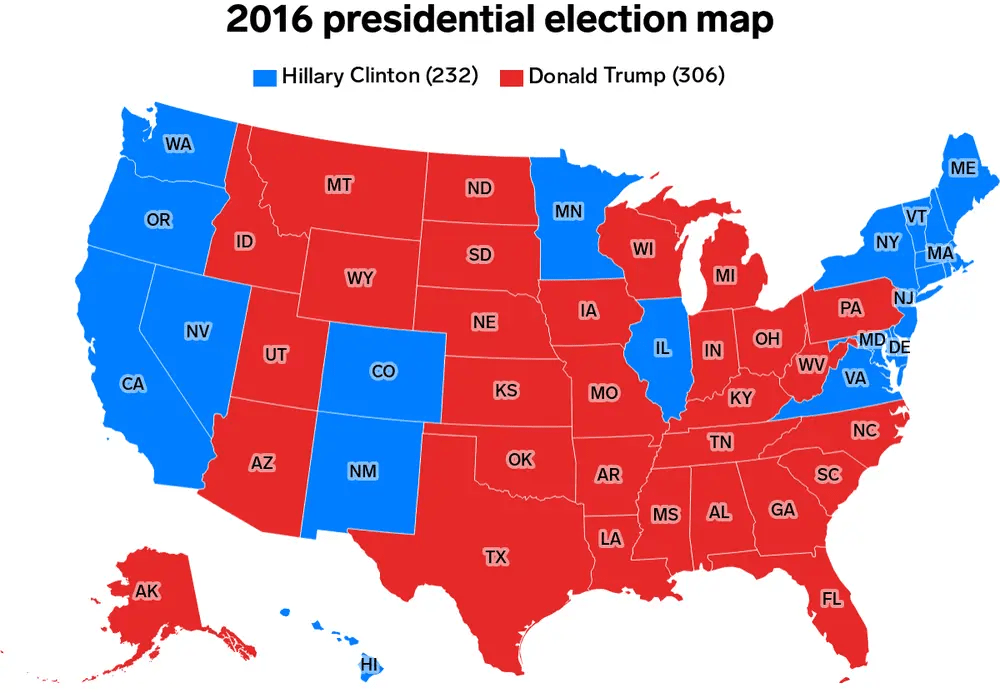
The 2016 presidential election was for polarisation. Hillary Clinton wanted to win it by pointing fingers at Donald Trump. Donald Trump on the other hand wanted to ride the way of populism. Hillary Clinton assumed victory and didn’t even bother motivating voters to vote. Between the choices of known vs unknown, people who preferred known came to vote more. The opinion polls consistently showed Hillary Clinton winning the elections. What we saw was a phenomenon where people lied about their preferences in public. It was a manifesation of Timur Kuran’s Private Truths and Public Lies in the political sphere. The result was the victory of Donald Trump.
The 2020 Presidential Elections
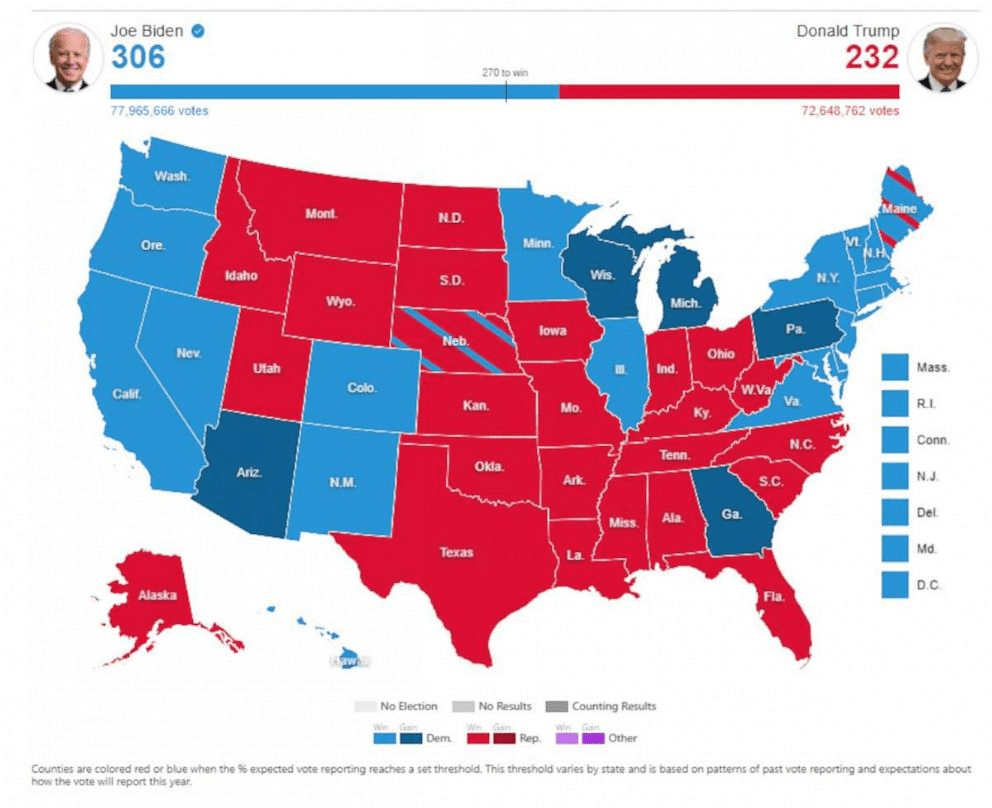
The 2020 presidential election was for normalisation. It wasn’t strange that the margin and the number of votes were the reverse of 2016 election. The preference of Donald Trump wasn’t taboo anymore. People who likes him came out in the open. On the other hand, Joe Biden was considered a safe choice, someone who is within the margin of normalcy. After adrenaline packed four years, where we were woken up by rants on Twitter, dismissal of secretaries, threats of violence against global leaders and calls to drink disinfectants to cure Covid-19, people wanted normalcy. A presidential term where we can have our heart rates in control, while we are all dealing with the rampant spread of a pandemic seemed to be the need of the hour. The deteriorating mental and physical abilities of Joe Biden didn’t deter people as much. He was able to get people to vote more in the swing states than Donald Trump.
The 2024 Presidential Elections
The 2024 presidential elections is one for compromise. Is having a president whose critical faculties are waning by the hour better than another four years of adrenaline rush? Can Donald Trump can scare enough people to not vote for Biden because of his falling ability over his erratic behaviour? Can Joe Biden remind people who the term from 2016-2020 and compare that to the relative sanity of the present? This is also the first election where people have a choice between two candidates who have been presidents(at least from my research). I don’t have a crystal ball but there is a case for and against both candidates. Here are my variables and predictions for the elections.
Key Criteria
The debates in this elections is lot more important than the previous ones. If Biden is able to standup to a bombastic Trump, then it will show that he is capable of handling himself for another four years. On the contrary if he crumbles under pressure then it will be advantage to Trump
A reversal of any kind to the economic downturn will definitely help Biden.
My predictions
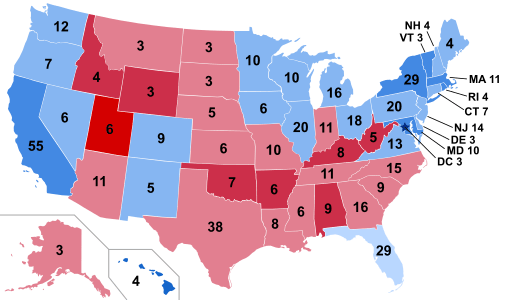
The results in this election will be lot closer than the previous two in terms of number of seats. It is unlikely to see a 306-232 split.
If the current situation and trend persists, then there is a higher chance of Donald Trump winning than Joe Biden. This is because voters have poor memories. We remember highs and lows in our personal life. The every day mayhem gets forgetten in four years. The anti-incumbency wave is more likely to go in favour of Trump.
The US Presidential Election season is back. The 2024 Election is the seventh presidential election since I started following it in 2000. I have to admit that the fever and anxiety have only increased with every passing election. The decency with which Al Gore wished George W Bush after 537 votes decided a well-fought election and a 5-4 decision in the Supreme Court is not in the culture anymore. 12% of the population who can vote (Approximately 31 million) weren’t born when this incident happened. As far as the Congress goes, friendships and respect across the aisle have been replaced with partisanship and divisiveness. The left wing of the US Congress believes that the country is still deeply rooted in racism, sexism, inequalities and constriction of opportunities. The right wing of the US Congress considers that the past was a glorious time, the future is looking bleak, and there is a war on culture and religion. People like me, who, for all practical purposes, were socially and economically left of the 1980s and 90s, are left baffled by this. At the risk of sounding like a lesser intellectual version of Steven Pinker, I want to analyse if the situation is indeed alarming and how to deal with this anxiety.
The two key outcomes I want to achieve out of this are
Are Donald Trump and Joe Biden as good or bad as their supporters and detractors respectively make them to be?
Is there a reason to be anxious about this election result? Will anything go wrong?
In the first stage of this process, I want to look at the data from the time of Barrack Obama to Donald Trump and finally to Joe Biden. I want to break the data into the following categories.
Economic
Action on Illegal Migration
Income and Wealth Distribution
Climate Impact
Military Spending and Wars
Economic Factors
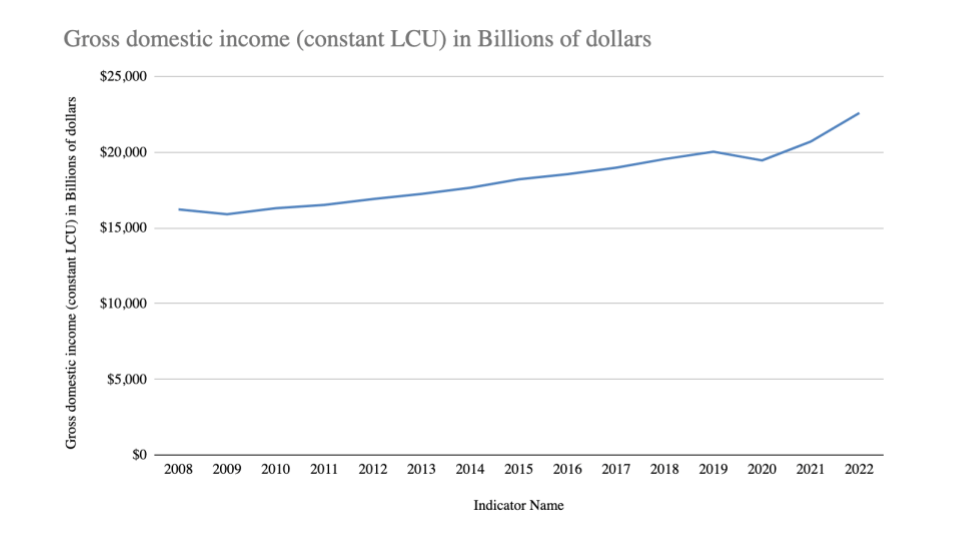
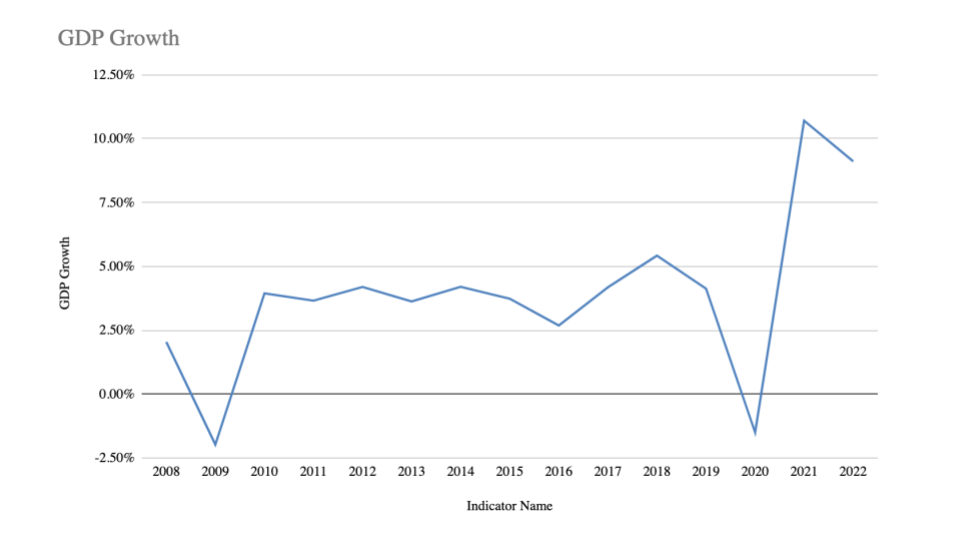
For the purpose of this exercise, I analysed the overall GDP, GDP per capita, GDP growth rate and finally, the Debt to GDP ratio. Starting at 16 Trillion dollars in 2008, the US economy has grown at an average of 3.88% yearly, cumulating to over 38% by 2022. Barring the COVID-19 impact in 2020, it has been a rather steady growth. The same pattern is reflected in GDP Per capita. The only alarming figure in the economy is the Debt/GDP ratio. While the GDP has grown at 3.33%, the debt has grown at a higher rate, thanks mainly to the boost provided during the Covid-19 crisis. While for any other country, a Debt/GDP of over 100% is a concern, the US $ being the global reserve currency, is better positioned to deal with this.
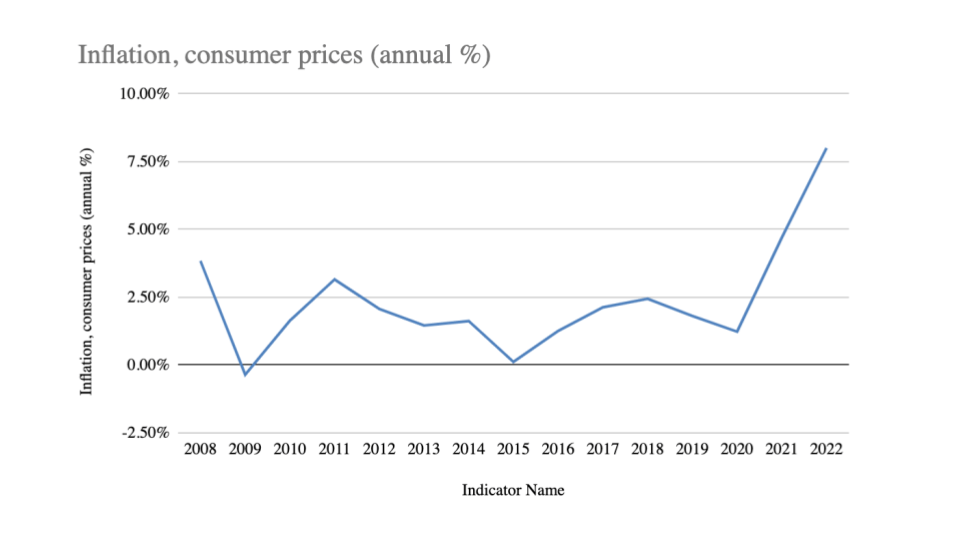
The most disturbing figure, though, is inflation. While it has been controlled for the better part of a decade after GFC, the war in Ukraine and the impact of the pandemic have put pressure on essential commodities, including fuel prices. If we combine this with the high debt, then we have another brewing crisis here.
Action on illegal immigrants
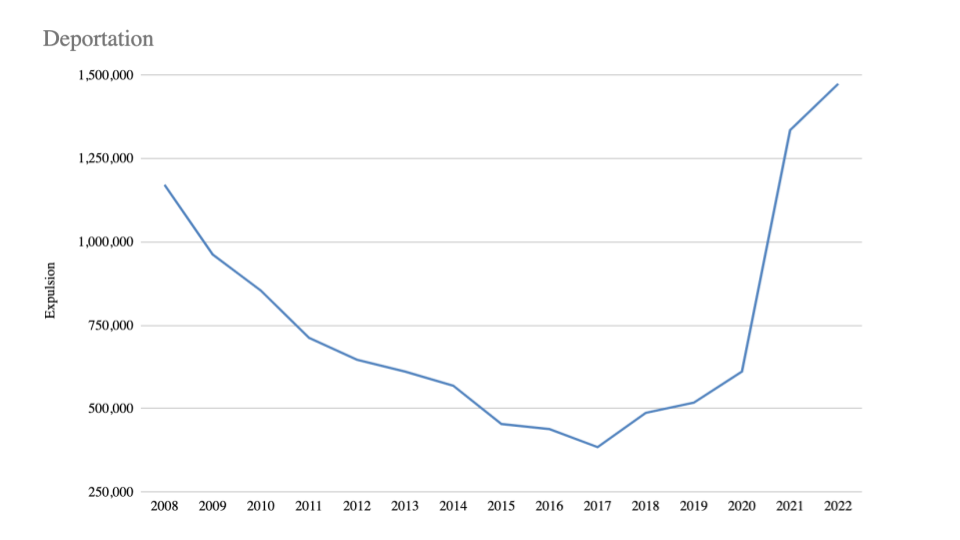
This was among the most sensitive issues between the Democratic and Republican parties. While Democrats were blamed for open borders, the Republicans were blamed for being insensitive and cruel. Well, as the saying goes, data never lies. The truth is Obama and Biden deported more people than Donald Trump ever managed. Trump, however, made more noise about this than Obama or Biden did.
Income and Wealth Distribution
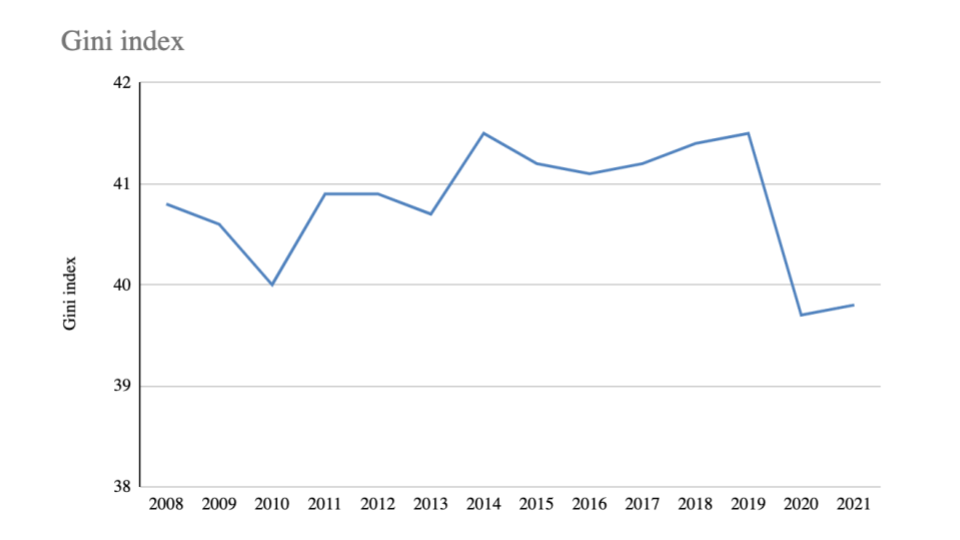
One of the most popular opinions is that the Republicans are the party for the rich and Democrats are the party for the working class/unions akin to socialists. The reality is that the income distribution pattern in the US hasn’t changed in the last 16 years. Irrespective of which party is in power, they side with their donors to arrest wealth distribution of any kind. It is true that the top 1% have earned more in terms of percentage, but the pattern and percentages are no different from the past. I am not justifying the disparity here but merely pointing out that the situation hasn’t changed to warrant anxiety.
However, the GINI index, which measures the dispersion of income, wealth and consumption inequality, presents a more positive figure. For the first time in years, the figure is below 30 now. It isn’t a reason to celebrate, though, as the contributors to this are most likely inflation and economic slowdown.
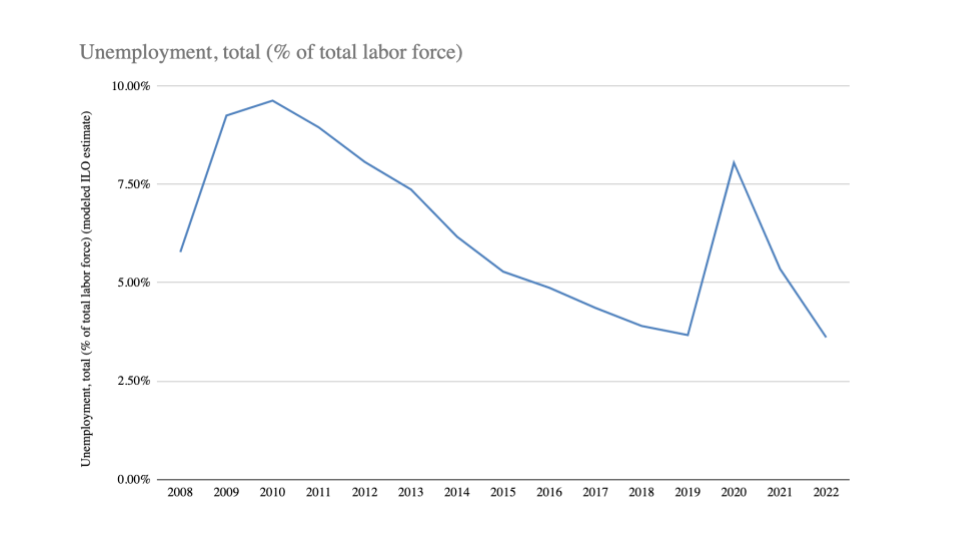
The last figure to look at now is the unemployment percentage. Again, barring the impact of Covid in 2020, we have seen this figure decline consistently from 2011. It doesn’t matter if the president is a Republican or a Democrat.
Climate Impact
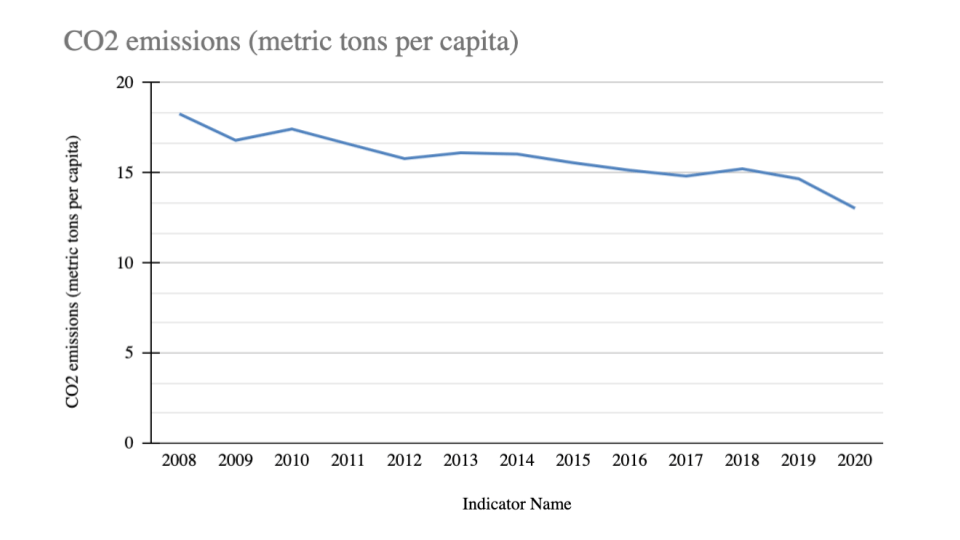
The last of the factors I want to look at is the impact on climate. As we look at per capita emissions from 2008, we see a steady decline even during the period of Donald Trump. Irrespective of whether the US is part of the Paris Agreement, the underlying change continues to happen, transportation is getting cleaner, and the emissions are going down.
Military Spending and Wars
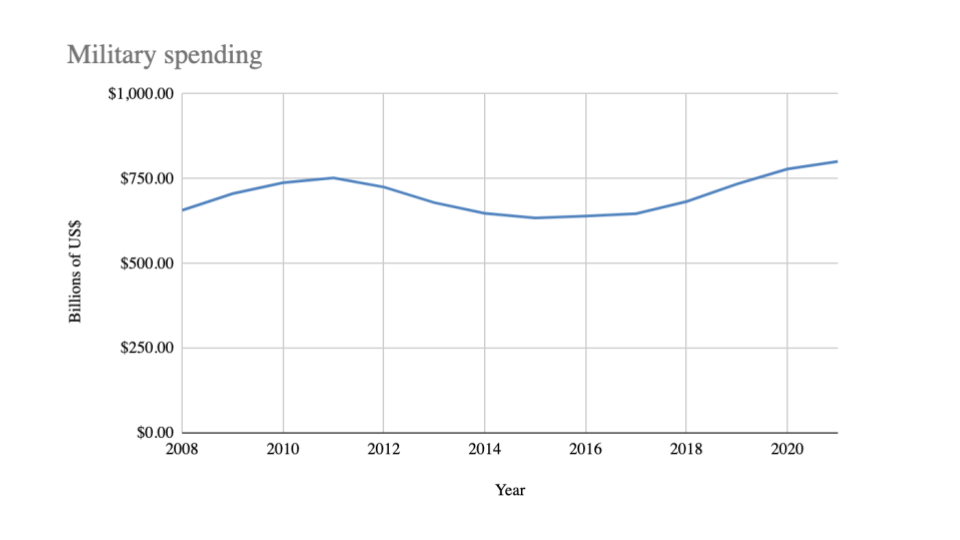
Inflammatory speeches and partisan opinions aside, the US hasn’t engaged in a new war since Hillary Clinton left the Secretary of State office. Neither Trump nor Biden have armed children in Africa or bombed a new sovereign nation. Bombastic speeches aside, Trump did diffuse a dangerous situation with Assad in Syria. Biden’s speech aside, he hasn’t added fuel to the fire in the latest conflict in Gaza. All said and done, the spending on the Military hasn’t come down. Having reached its lowest point in 2016, the spending is on the ascendency. I am sure most military officers will take spending over war.
As seen from the data (source: World Bank and OECD), the health of the United States is not dependent on the president at all. One could find more correlation between the war between Russia and Ukraine than the president or the party of the president. However, this definitely doesn’t mean that there aren’t problems or that the data is good. It is just normal. In the next part, I will focus on dealing with the probability of another Trump presidency. Whether we like him or loathe him, it is impossible to ignore the impact his term had on the mental health of all Americans.
The path to recovery from any illness cannot be one of solitude. I spent many days in a pensive mood, trying to unravel the happenings. A key aspect of the entire process was the support from my loved ones. It includes family and a close bunch of friends. I will not name anyone here, as people in that group know about it. I want to share the value of the support and my tribute to all of them.
One striking change in my perception of my ability was the need for approval. I continuously felt the need for acceptance and acknowledgement akin to a child. While I can comfortably say that I am over that stage, I am incredibly grateful that I got the necessary support. For a person who thrived on hatred, I wanted appreciation and affection. It isn’t easy for people who were on the receiving end of this.
I want to present a tribute to everyone who supported me.
Arrogant was I, with a penchant for candour, breezing through life and dreaming of valour. Blessed was my state, rare if any in aught, the slip from grace was rapid and fraught, Senses went grave, meandering through the dark, Gripped by angst, my fall was quite stark, “What next?” I wondered, devoid of pleasure, Bleak felt my future, having lost the treasure. “What is left of life sans glee?” I murmured, Alas! I felt thy hand of kinship, totally undeserved, sharing my agony, bearing through kind and sober, ebbing and flowing with me, never asking a favour, what pleasure do I owe, for all thy grace, so profound was the love I felt in thy embrace, I beseech thee to ne’er keep me at bay, for I owe you more than words ever convey.
A sincere thanks to my family, friends and doctors.
Elisabeth Kübler-Ross came up with the five stage model for grief: denial, anger, bargaining, depression and acceptance. If I had to adapt that model for my state, I had already crossed the first four. The issue was the final hurdle from depression to acceptance. As Sam Harris says, Free Will is an illusion. Once we form a habit, it is going to be hard to unlearn. Our brain takes over and triggers action way before we can ascertain the implications of the action. I couldn’t imagine a world I won’t be able to bulldoze the issues at work. I could feel the cortisol imbalance in my system. I walked into the therapy, hoping my problem was physiological and not psychological. My bigger want was a mean reversal back to my previous state.
My first session with the psychologist was a revelation. Once I sat down in front of the psychologist, I kept my bias aside. I wanted to give therapy a chance. I spoke for close to two hours. I shared my issues honestly. I opened up about my insecurities. I relived every incident from the previous six months. It left me in a battered state, completely drained and devoid of any energy.
The fortnight following the first session was comfortably the hardest. It coincided with the Christmas break, leaving me with very little official work to do. I felt exhausted and started sleeping at odd times. Interactions with people were still hard. As expected from a person of my ego, I managed to hide it from everyone except a select few.
Fast forward a couple of weeks, I was already at work. I had overestimated my recovery. In less than a week, I realised that I had no energy left to continue and needed a longer break from work. For starters, I took four weeks of leave. Little did I know that I wasn’t going back to work in the same place again.
In line with Freud’s psychoanalytic theory, my id was to take a battle head-on. The super-ego which had to instruct me about self-preservation doesn’t exist at all. What followed were cycles of ebb and flow on the path to recovery. I never really got my head out of the issues at work. As I mentioned in my first blog of this series, I have an addictive personality. My two addictions were:
My close circle of people I care
My work
My inability to get myself detached from the latter was affecting my relationship with the former. After every ebb, the fall was drastic and painful. Very soon, the situation hit an abyss.
Something had to give in as my situation started to deteriorate rapidly, and the discussions at work started to get more apathetic and tense. After almost eight weeks of leave, I realised returning to the same setup wasn’t an option. I decided to quit and move on. The anxiety also hit its peak as I was prescribed medication to deal with the situation.
Three weeks in, the medication started to take effect. I also began to disassociate myself from the job. The path to recovery had just started. My therapist told me that I am suffering from Post Traumatic Stress Disorder. Unfortunately, the damage has already been done. The road to recovery will take time and plenty of care.
One year after this entire episode began, I am feeling close to my normal state. I am still on medication, but I haven’t had an episode of anxiety in close to 3 months. This traumatic experience has taught me how fragile my mind was, irrespective of what I thought. This recovery was possible mainly due to the support I received from my loved ones.
The business world judges a person on their ability to handle pressure. I took pride in wanting the most painful engagements. I had a war complex, a desperate need to overcome adversity and deliver results. This pride eventually resulted in my fall. As a consultant, I expected poor behaviour and pressure, but the customer always loves excellent outcomes. The situation is the opposite if you are a business leader. One is bound to attract all the ugly elements of corporate culture as they show positive outcomes. We must deal with insecurities, political backstabbing, nepotism and dishonesty in our organisation. I failed to recognise it.
As pressure mounted at work, sleep started to elude me slowly. Leaving my wife and daughter in one bedroom, I confined myself to another. Social interactions began to consume more energy than usual. It left me drained and battered at the end of the day. I asked my wife to not speak to me and instead text me if she needed anything. I spent 20 hours a day in a single room without interacting with my family. Isolation from face-to-face interactions and immersion in work were my drug as I felt increasingly petulant each day.
Anxiety is the worry of losing something which one considers precious. I started developing palpitations a few times a day. At first, I attributed a cause to each of these incidents. Being locked in a room was a good excuse for me to hide this state from my family. As the country was in lockdown, there was no need for me to step out. The duration and frequency of these started to increase slowly. I am still unsure if the anxiety caused the palpitations or vice versa. However, every time I felt a deep sense of loss. The insecurities in my life slowly started to come to the forefront. Questions like “why will my wife continue with me?”, “why will my daughter like me?”, “why will my friend continue to talk to me?” and “what value am I adding to work?” started to haunt me.
Confidence is the most underrated virtue. We don’t realise the value of it till we lose it. I was a person with immense confidence in my abilities and total disregard for my shortcomings. In short, prior to this episode, I was highly assured. I failed to identify the attacks happening at work. The deviousness of the character assassination and lack of atonement made it worse. I didn’t recognise that the support I sought was part of the problem. The senior leaders whom I trusted turned out to be callous. This inability to foresee affected my perception of myself and dented my confidence. I slowly lost the sense of who I was and what I could do.
Self can’t be an illusion when one is depressed. Lack of sleep, anxiety attacks and loss of confidence left me in a state I hadn’t experienced. I had to admit the vulnerability of my mental health. I became a victim of my expectations. I couldn’t concede I was affected. I was too strong to end my life. I lay down every night, hoping I wouldn’t have to wake up. Every sunrise was a disappointment.
The worst happened sometime in December. Stress levels at work reached a new high. As a team, we celebrated our Christmas by having a Go Karting race. The rush of adrenaline during the race compounded the palpitations caused by my anxiety. I lost my ability to think sanely. I woke up every 10 seconds that night with a fear of loss. The next couple of days were horrendous. I was acting my fears out. The unpleasant feeling hit rock bottom when my wife saw me struggle to watch a movie with her.
Unable to stand my state, my wife confronted me and forced me to open up. I was also a person with biases against anything I perceived as irrational. One of my biases is the need for therapy. I always felt it was for the weak. While I appreciated psychology as a study, especially evolutionary psychology, I found the concept of seeking psychological help beneath me and never perceived myself in that state. Perception isn’t reality. Something had to change to arrest this downward spiral.
Life is as fragile as it comes. The quarks in our body have survived 13.6 billion years to evolve into a conscious species which can think, feel, plan and act. Above all, it forms relationships with people and attachments. In July of 2021, if someone had asked me about my life, I would have categorically said it is as perfect as possible. Fast forward six months, I suffered from anxiety and depression at levels I had never encountered. The fall from perfection was rapid, especially for a person with no expectations from his life. If you compare my state with people in the war-torn areas, it does feel like a first world problem. As a person with a high ego who never thought I could ever need external support for my mental health, the last few months have been a big revelation. Randomness and entropy drive this universe and life. My solitary insignificant consciousness cannot be an exception to that rule. At the risk of sounding cliched, my life has come a full circle.
Every being is a summation of our evolutionary past and learnings from the time of birth. We are deterministic and like to seek answers to all questions. I am no different. I was born agnostic like every other child. I was fearful of consequences, anxious about unknowns and insecure about my value. The loneliness of these traits, coupled with some horrendous childhood trauma, made me the person I am known by people around me today. I am obnoxious, cynical, confident, brutally honest and an ergomaniac.
“On a treadmill, I either win, or I die”, Will Smith once said in an interview.
“A cynic is just a dead idealist”, said the famous comedian George Carlin.
These two quotes summarise my attitude roughly. The anxieties and insecurities were buried deep as I forgot to care about anything but the truth. Over the years, I also realised the two key pillars of my personality, addiction and ego. I get addicted to people and behaviours. My ego pulls me out when I realise the loss of control. This combination has kept me in check overall. It also meant I was keeping an eye on my attachments.
As the saying goes, the only way from the top is down. In July of 2021, my life was at its best. I was happy and content as lockdown hit Sydney. I immersed myself in my new role at work. I loved the job and found it quite gratifying. Unfortunately, life isn’t gambling. One can’t quit when they are high. The situation at work started to take a turn for the worse. Lockdown helped me as I lost track of time. As the work environment got toxic, I spent more time trying to compensate. In less than a month, my mind started to crumble without my knowledge. In a few months, I was suffering from a stress induced anxiety disorder.
The choice between sure death and a small probability of life is not something most of us will ever encounter. It is not even something we can fathom as it isn’t within the realms of possibility. If one is fleeing an oppressive Taliban regime with barbaric beliefs, then even clinging onto the outside of an aircraft is a chance worth taking. As we see the plight of millions of people stranded in Afghanistan and thousands trying to flee in the middle of a global pandemic, it is natural to question the timing of American troops withdrawing from the war-torn, landlocked country. I want to retrace the events which led to this decision and the reaction of the global leaders. Foreign policy can be messy, illogical, inconclusive and also devious. Foreign policies decisions also have a long term impact which are hard to predict.
The tale of 2 foreign policy blunders
The Cold war between the Capitalistic Social Democracies and the growing Communist single party rule was vastly responsible for what we consider present. From nuclear arms race which can obliterate our planet 10 times over to technology race to conquer space, the cold war had immense influence. What gets discussed less is the foreign policy impact of the cold war. Let’s pick two of the foreign policy blunders made by the US which are relevant to the context of Afghanistan.
The first foreign policy fiasco can be traced back to the era of Henry Kissinger and his indirect support for the capture of East Timor. The ego of the US war machine had been recently wounded by the Vietnamese. When Indonesian dictator Suharto invaded East Timor under the pretext of anti-communism, the Nobel peace prize winner Henry Kissinger found the opportunity to quench his thirst by supporting the movement. A weak Australia and other NATO nations joined. What followed in East Timor was ethnic cleansing and grave violation of human rights. The UN peacekeeping forces finally managed to get the imperialistic Indonesian forces in 1999. Why is this story relevant? This story is relevant as the freedom of East Timor is one of the biggest grudges Osama bin Laden had against the Americans.
The second foreign policy was the involvement of the US/UK coalition in the Soviet-Afghan war. The Soviet-Afghan war, ravaged Afghanistan from 1979-1989 between the USSR backed People’s Democratic Party of Afghanistan and the US and UK backed Mujahideen. Most of the later Taliban leaders were part of the Mujahideen. The principles of the Mujahideen haven’t changed from their original days. Towards the end of this war, al-Qaeda (formed in 1988) joined sides with Mujahideen to fight the Soviet-backed forces. The Mujahideen won the war with the fall of the USSR. This was followed by an Afghan Civil war which went till 1996. With the communist threat eliminated, the various factions of Mujahideen started fighting for control and ideologies. A newly formed group called the Taliban emerged victorious with the support of the al-Qaeda fighters and the Pakistani army. They took over Kabul in 1996, to establish the Islamic Emirate of Afghanistan. Once their mission of capturing Afghanistan was accomplished al-Qaeda started its attack against the US and its allies. This culminated in the 9-11 attack which shook the world.
By now, the world had forgotten the two big policy blunders which were nothing more than an extension of the cold war policy. The US support for both the Mujahideen in Afghanistan and the Indonesian invasion of East Timor was driven by their anti-communist ideals. Borrowing the language of Margaret Thatcher, the US government gave the necessary oxygen for the Taliban monster to grow. Would they have done this had they had the power of hindsight? It is anybody’s guess.
Evolution of the Afghan policy after 9-11 attacks
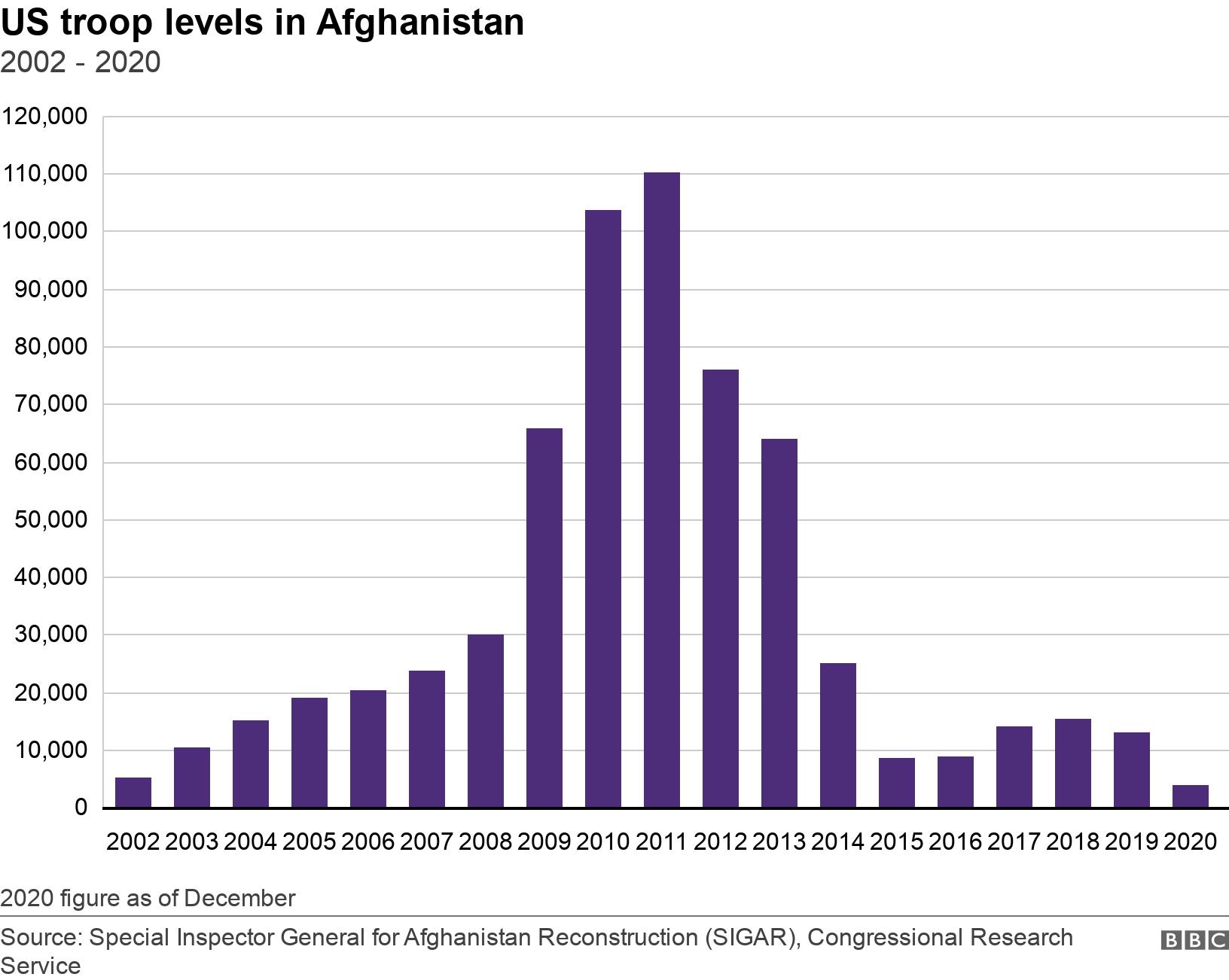
Three months after the 9-11 attacks, the Taliban government in Afghanistan and their al-Qaeda were ousted. They took refuge in the various remote parts of Afghanistan, Pakistan and some of its leaders went to Qatar. At this time the NATO army had less than 10,000 forces on the ground. They reached this level again only late last year. The total cost for the US treasury from this war is $830 billion which doesn’t include the military aid given to other countries to support the base or the support to veterans. A total of over 1 million people have been deployed to Afghanistan over the last 20 years.
The US foreign policy has also consistently changed over time. President George Bush said he wanted a ‘stable and free and peaceful’ Afghanistan. after the destruction of al-Qaeda and total elimination of the Taliban. When his administration finished its term, there were 30,000 American troops in Afghanistan.
The next President Barrack Obama wanted to end the war. His foreign policy included having a conversation with the weakened Taliban troops. Ironically, he increased the number of troops from 30,000 to around 100,000 by 2010. However, he did have a conversation with Taliban leaders. The then, Secretary of State Hillary Clinton had a condition, “Insurgents must renounce violence, abandon al-Qaeda, and abide by the constitution of Afghanistan, including its protections for women and minorities. If insurgents cannot meet those red lines, they will face continued and unrelenting assault.” The peace talks didn’t move further but the number of troops came down slowly. Obama left close to 10,000 members when his term ended. However, some territories had slowly been captured by the Taliban by then.
In comes the next President, Donald Trump. Trump has been calling for the end of the Afghan war and the return of the US troops during his entire campaign. The big difference between his secretary of state Mike Pompeo and the previous one was, Secretary Pompeo wasn’t keen on some of the protections which Secretary Clinton had demanded. So, on Feb 29, 2020, the US peace envoy Zalmay Khalilzad, and Mullah Abdul Ghani Baradar, the Taliban group’s top political leader signed a peace agreement. This deal meant close to 8600 US troops will leave in less than 4 months and the remaining by 14 months.
In April 2021, the current President Jo Biden announced that the remaining troops will return as per the agreement signed by his predecessor. In a press conference in Jul 2021, President Biden said he doesn’t believe the Taliban will take over Afghanistan. Was this wishful thinking or just bluff? Considering that the peace deal was signed with the Taliban permitting them to return, this was a very bold statement at its best.
The fall of Kabul
On the 6th of Jul 2021, the US forces leave Bagram airfield their main military base. By the 6th of Aug, the Taliban had started capturing provincial capitals. On 13th Aug, they take over Kandahar, the second-largest city in Afghanistan. At the dawn of 15-August-2021, when the Indians were celebrating their Independence day, their Afghani friends lost their national capital to the militia. It is not the collapse that has surprised people but the speed of it. President Mohammad Ashraf Ghani Ahmadzai fled the country leaving his people in the hands of a dangerous militia. Now, three big questions remain.
a. Who won this war? b. Was this a strategic mistake? c. What is going to unfold now?
The Afghan war has lasted twenty long years. The NATO forces spent over a Trillion USD in the war and building new infrastructure. 18 years of democracy crumbled in less than 9 days. The original leader Mullah Omar and Osama bin Laden are dead. Much to all our wishes, the Taliban have come back. Should we change the goal post now to say the aim was not to defeat the Taliban but to eliminate al-Qaeda?
For years now, members of both the left and right in the US have wanted the troops back. The only faction which was against it was the ones funded by the military-industrial complex. From Donald Trump to Bernie Sanders, from Rand Paul to Tulsi Gabbard, the politicians have called for the troops to return. This wasn’t a war for the US troops. The question was return was the one of if but when.
Now, could the handover been planned better? Was there an intelligence or strategic failure? To answer these questions, we need to look at the facts first. The US government has spent over $80 billion was spent training the 300,000 Afghan troops and provided them with modern war machinery. The Taliban on the other hand had 80,000 people with relatively older artillery. The Afghanistan government had army, police and local militia to support. Even with all these advantages, there was no clashes. The Afghan troops surrendered without a fight in most places. Would the situation have been any different if the US forces left a little later? Should the US forces have anticipated this and helped migrate the vulnerable people? In hindsight, I have to affirm the same. However, the writing for Afghan democracy was always on the wall. The only policy mistake I can see is that the allied forces should have got the people who supported them out of the country before exiting.
The future
Finally, to understand what could happen in the future, let’s look at the reaction of the global leaders in the aftermath. There are few distinct factions here. First is the pro-Taliban group which has the Pakistani Prime Minister Imran Khan. He has always been extremely supportive of the Taliban. Having been educated in Oxford and enjoyed the liberty of the western lifestyle for himself, Imran Khan has proclaimed this as “breaking the shackles of slavery”. The next group are opportunists, which include Russia and China. The leaders from these two countries have already spoken to the Taliban leaders. They see an opportunity with the fall of the retreat of the western forces. The next group are the sceptics, which includes countries like the US, EU, Australia and India. These countries won’t recognise the Taliban government but will be ready to have peace talks with them. The final group will include three countries that will not recognise or have discussions with the Taliban namely Isreal, Canada and Iran.
However, the big question in my mind is whether this move is the next foreign policy blunder after Vietnam, East Timor and the support of Mujahideen? While I don’t think it is a mistake of similar proportion, I fear the impact might be similar. We are going to see another refugee crisis, extreme oppression and international cry over human rights violations. The Taliban have an approach to gain power and unwavering allegiance to their interpretation of their religious texts. This approach will give them the power to rule but not the ability to govern. The local and global unrest is going to continue. The disadvantage for the Taliban over the Saudi Royal family is that they don’t have an oil supply to generate wealth.
For over a decade the year 2020 was earmarked to be a milestone year in both business and politics. However, no one could have foreseen the horror that hit us. The world was unprepared to deal with a pandemic of this proportion. The official figure states that approximately 80 million people have been affected and over 1.75 million have died. Plenty of people have lost their near and dear ones. In the process, we have also lost some global icons like Diego Maradona, Kobe Bryant and Sean Connery. However, the two who have left an indelible mark in public sphere were Ruth Bader Ginsburg and Helen Reddy. I want to take a moment and reflect on the latter, a woman who became an representation of the second wave of feminism with a single song.
Some people have an impact which goes beyond their actual work. They inspire a generation. Helen Reddy was such an inspiration. When most cultures of the world were still stuck with prehistoric myths about women, the counter culture and the feminist movement made huge strides in taking civilisation forward. The civil rights is much more than Dr. Martin Luther King Jr and “I have a dream”. The free speech movement is much more than Mario Savio and “Bodies upon the gears”. The feminist movement is also much bigger than Helen Reddy and “I am a woman, hear me roar!”. However, both the individual and their work had a significant impact in shaping up an entire generation.
The biggest mark of respect for Helen Reddy is what we can learn from the woman who roared. Her songs and voice have already been immortalised, thanks to our ability to record and play them. However, as I mentioned before her work signifies more than the construct of the creation. There are two key learnings I want to highlight from the works of the lioness.
Showcase strength not weakness
Constant fighting can be sapping and will easily pave wave for self pity and weakness. The trend these days is to infantilise every community when they are affected. However, the battle for equality cannot be left to infants. There are some key values I want to share in order to showcase the strength.
It is fine to be the first
Humans innately seek patterns. We look for people who share our traits. This is especially true if we think that trait has been historically discriminated. The most common ones are physical ability, gender, religion, sex, race and nationality. We don’t hear about the first bald Nobel Prize Winner. That is because no one associates with baldness as their key attribute. One key value we should learn is not to find precedence with the characteristic we associate with ourselves.
Equity is not a means for equality
To give every individual adequate support so that they can do well is paramount in a civil society. To give every individual different advantage so that they can all reach the same destination at the same time is discrimination. The former is equality. The latter is equity. If I had trained alongside Usain Bolt all my life, it doesn’t guarantee me achieving the same result in sprinting. Equality is where I get all the necessary facilities to be the best sprinter possible. Equity on the other hand is ensuring I get a head start to ensure I finish the race at the same time as Usain Bolt. It is a dangerous idea. Equity is often thrust as a tool for equality. It is completely contrary. It sidelines people and in a passive aggressive way also denies them the opportunity to live their life with grace and respect. We should showcase enough strength to reject equity even if it sounds tempting.
Act sensibly, standup immediately if you can
Safeguard yourself first. Once you are safe, then do not be a silent spectator to an injustice. If one doesn’t act at the first possible opportunity, then one invariably allows the injustice to propagate. Think of the number of Hollywood stars who didn’t open about either Bill Cosby or Harvey Weinstein. These starts who preach morality to us sitting in the comfortable beach houses could have highlighted the issue years in advance. They were in a safe space. Instead they quietly watched as the predators kept counting their victims.
Prepare the next generation
Every individual is a victim of their situation. Not everyone has the courage to face and fight back. However, everyone can prepare the next generation for a fight. It is crucial that we teach our kids to question, standup and fight for their rights and everyone else’s rights.
Do not become the monster you hate
Perpetuating community hatred
What is the difference between the below sets of assertions?
“Women are too weak to be by themselves” “All men are horrible”
“White race is superior” “All white people are racist”
Both these sets have two opposing views and all arguments are non sequiturs. It is a generalisation from one example. These assertions will only propagate further division and violence in the society. However, what we see today is a strong movement towards the second assertion. It is almost like the pendulum has swung too far to the other side.
Belief shouldn’t circumvent due process
For centuries the word of a woman has been either ignored or undermined in the court of law. This has resulted in men getting their way with the judgement of their choice. For example even today in most islamic courts, the evidence of a woman is only weighed half as much as a man. This horrific situation where justice is based on barbaric laws and incorrigible beliefs has caused havoc to societies which practice this. We all need to fight for due process, facts and verification of evidences.
The same due process should apply if the roles are actually reversed. An accusation against a man which is based on preconceived notions established by the stereotypes is just as horrible. It isn’t justice but an inappropriate revenge. Such behaviours will only send the civil societies spiral into anarchy.
Liberty is a freedom to choose not a mandate to change
A woman should have the right over her reproductive cycle. She needs to have the right to go back to work when she chooses. She needs to have the right to choose the career she can excel. The key word in all this in choice. This means the woman has the right to choose a path which can be stereotyped. For example, she can decide to quit her job and raise the child. She can decide to be a teacher over an engineer. The mandate to have diversity in a field shouldn’t come at the expense of forcing a woman out of her comfort.
I increasingly see woman who decide to have a family, go into creative arts or in some extreme cases just be soft spoken looked down by the fellow women. This isn’t liberalism or feminism. This is unadulterated discrimination. It is the unforeseen result of people who have become the monsters they hated.
To conclude, I strongly feel we need to go back to the principles which stand out of the famous song. Rest in peace Helen Reddy. Your words are immortal. They will last till we have language. The words will resonate in my ears till my brain can process sound.
I am woman, hear me roar
In numbers too big to ignore
And I know too much to go back an’ pretend
’cause I’ve heard it all before
And I’ve been down there on the floor
No one’s ever gonna keep me down againOh yes I am wise
But it’s wisdom born of pain
Yes, I’ve paid the price
But look how much I gained
If I have to, I can do anything
I am strong (strong)I am invincible (invincible)
I am woman
You can bend but never break me
’cause it only serves to make me
More determined to achieve my final goal
And I come back even stronger
Not a novice any longer
’cause you’ve deepened the conviction in my soul
I am woman watch me grow
See me standing toe to toe
As I spread my lovin’ arms across the land
But I’m still an embryo
With a long long way to go
Until I make my brother understand
Oh yes I am wise
But it’s wisdom born of pain
Yes, I’ve paid the price
But look how much I gained
If I have to I can face anything
I am strong (strong)
I am invincible (invincible)
I am woman
Oh, I am woman
I am invincible
I am strong
I am woman
I am invincible
I am strong
I am woman
Today marks the seventy-first birthday of a great man whose words and actions liberated a lot of young minds across the globe, a man whose language skills inspired a generation of writers and whose drinking ability brought charm to alcoholics. The man is none other than the great orator, author, polemicist, journalist Christopher Eric Hitchens or as his friends call Hitch. I couldn’t find a more apt day to come out of my hiatus and write again. This is my tribute to the great man, who had an unparalleled influence on me and a person I consider my mentor. Writers and scientists far superior to me have written about the great man. I can’t stop expressing my admiration to my hero just because there were people who did it more eloquently than I.
The most impressive part about Christopher is the axioms on which he operated. He also had a unique ability to refine them. While lesser mortals prefer distilled truths, Christopher can make his own from the collective learning of our entire species. As new facts emerged, he will be more than happy to dismiss those axioms for new ones. Further, his premises to those axioms were fairly simple. They were to achieve liberty, fellowship and wisdom. Every action and view of the great man were an extension of these. While many people say this very few people have ever stayed true to it in the face of adversity or contradicting facts but not Christopher. He will fight you even as his friend if you have to be corrected.
Very few people in history have defied loyalty to their group identity and always stayed true to their identity. Christopher Hitchens was a darling of the American radical left. His views were always in line with what we refer as traditional leftist views. He walked in lockstep with the famous linguist, dissident and author Noam Chomsky. He then parted ways with his comrades over the issue of Islamic terrorism. They wanted to blame the United States for it and Christopher wasn’t ready. This led to a year of trading insults in the public. Christopher wasn’t the one to flinch in the face of adversity. He fought back in a way only he can.
Oliver Goldsmith lived over 2 centuries before the birth of Christopher Hitchens but I imagine he had a view of Christopher’s ability when he wrote the Village Schoolmaster. The words can only do justice to Christopher.
Full well they laugh’d with counterfeited glee,
At all his jokes, for many a joke had he:
Full well the busy whisper, circling round,
Convey’d the dismal tidings when he frown’d:
Yet he was kind; or if severe in aught,
The love he bore to learning was in fault.
The village all declar’d how much he knew;
‘Twas certain he could write, and cipher too:
Lands he could measure, terms and tides presage,
And e’en the story ran that he could gauge.
In arguing too, the parson own’d his skill,
For e’en though vanquish’d he could argue still;
– excerpt from the Poem The village Schoolmaster by Oliver Goldsmith found in his collection “Deserted Village”
Christopher Hitchens was a ticking bomb in the hands of the people who want to use him for their vested interests. When Christopher parted ways with the American left on his war on terrorism, many people in the right started using him as a useful idiot or a tool in their hands. Little did they realise, that he was a ball of fire on their dirty hands. He burnt them alive with his scathing attack on religion with his book ‘god is not Great – How Religion Poisons Everything’. The book remains a masterpiece amongst the books written by the Four horsemen of Atheism. Christopher went on a book tour debating religious leaders across faiths and politicians across parties. The debates can only be described as the annihilation of the forces of darkness. His speech on the book at Google is still one of the best talks I have listened in Google.
Christopher Hitchens was a friend any honest individual would love to have and every dishonest person should fear. The two tales of friendship, one Salman Rushdie and the next with Sidney Blumenthal, perfectly encapsulates the fellowship Christopher held. Salman Rushdie found the militant support and reinforcement in Christopher when there was a fatwa against him from the Islamic nations or the protest against him being awarded the Bookers prize. On the other hand, Sidney Blumenthal faced the wrath of his once friend when he decided to backstab Christopher to be a confidante of the corrupt Clinton family. The man lived by and for his principles, right till his very end.
One of the famous quotes of Christopher was his response to a question on feeling safe in the night in an unknown city with religious people. Christopher responded to that question with cities without leaving the letter ‘B’ where he will never be comfortable when he knows that the crowd he is encountering is coming after a prayer meeting. It was brilliant, witty and above all irrefutable. I want to wrap my tribute to the great man by describing him with adjectives without leaving the letter ‘C’.
cantankerous – He was in all his views
captivating – He was when he expressed himself
cathartic – He was to every individual fighting for liberty
caustic – He was when you hurt his respect
challenging – He was when your views are wrong
changeable – He was with facts
charged – He was when taking on his foes
charming – He was admist adversity
cherished – He was amongst all his admirers
circumspect – He was about any faith
civilised – He was when dealing with common people
clever – He was as evident from his words
coherent – He was even when drunk
combative – He was when liberty is challenged
comfortable – He was with what he was doing
comical – He was when the situation demands
commendable – He was for all his output
communicative – He was to capture even a dissenting audience
compassionate – He was for people in need
competent – He was in every field
conscientious – He was when dealing with any issue
contentious – He was when drawn to dishonest attacks
convincing – He was in any argument
cordial – He was when being treated with respect
courageous – He was when facing a crisis
courteous – He was when speaking to strangers
Creative – He was with all his works
critical – He was of anything which affects humans in a wrong way
cultured – He was even when challenged
curious – He was as he kept learning
I can’t thank the great man enough. The world misses him as do I. His thoughts will live with me for the rest of my life.